
 The village of Mougins is where Pablo Picasso lived for the last 12 years of his life and where he died in 1973 at the age of 91. Picasso was buried close to Aix-en-Provence. Picasso first visited Mougins in 1953, when he was living in nearby Cannes with his long-time muse, Francoise Gilot.
Later that year, he met his second wife, Jacqueline Roque, who was 46 years his junior. She worked at the pottery studio where he worked in Vallauris, close to Cannes. Together with Jacqueline he bought a property near to Aix-en-Provence, called Chateau de Vauvenargues. Picasso had originally wanted to settle at Vauvenargues, but now nearing his 80's he grew tired of the visits to his doctors based in Cannes, so he began searching for a new property to live.
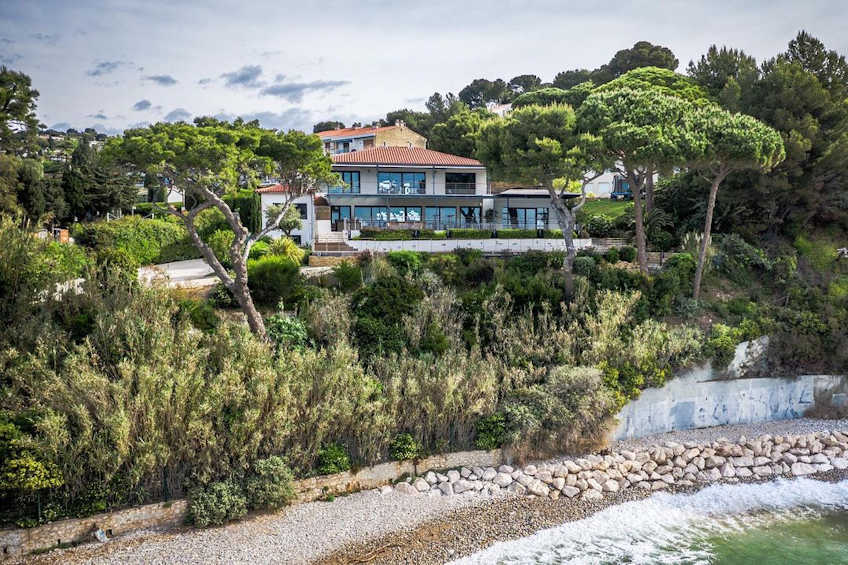
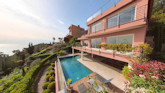
Pablo Picasso house in Mougins
Picasso eventually found a beautiful 35 room property located on a hillside above Mougins, called Notre Dame de Vie. He lived at Notre Dame de Vie for 12 years.
Notre Dame de Vie was named after the nearby chapel, whose lines of Cypress trees inspired a number of his drawings.
Picasso's time in Mougins coincided with the height of his fame and wealth. Although his productivity was slowing down, this period of time coincided with some important artworks from his 'later period'.
Where and When did Picasso die?
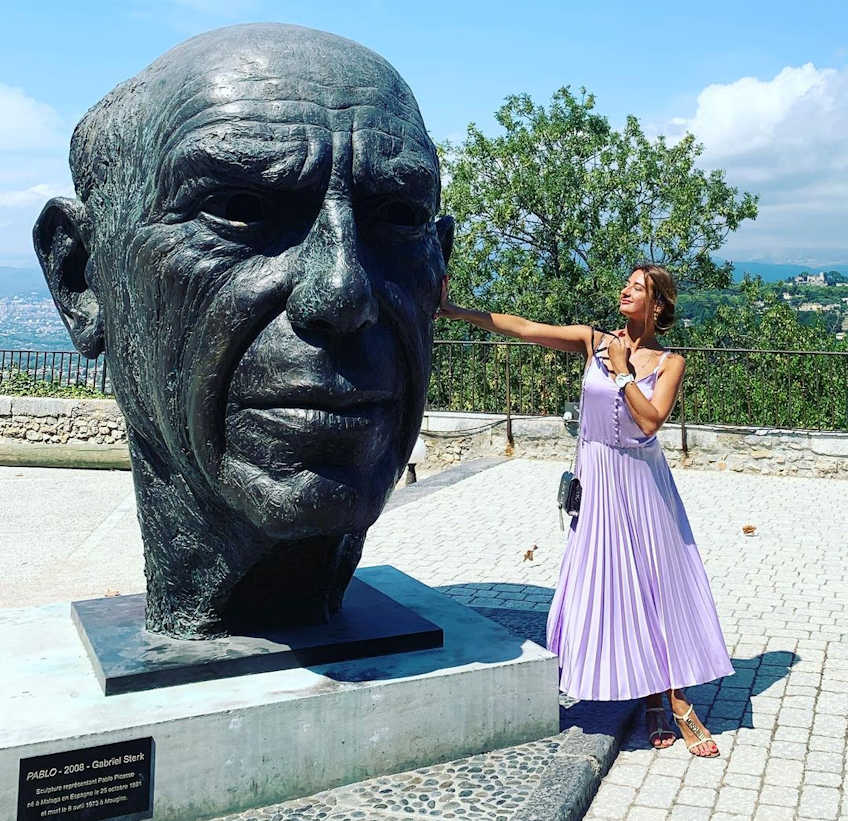 Picasso died at his home of Notre Dame de Vie, Mougins, France on 8 April 1973. During the evening he and Jacqueline had been entertaining friends for dinner, but he later fell ill. The cause of his death was fluid in his lungs which caused breathing difficulties and led to cardiac failure.
It has always puzzled me why Picasso was not buried in Mougins. In actual fact he was buried 2 days after his death in the gardens of the Castle of Vauvenargues, close to Aix-en-Provence in the Bouches-du-Rhône department. I assumed that he had some connection to the castle.
But I read recently, that when Picasso died, the Mayor of Mougins refused his burial in the town, apparently referring to him as a "billionaire communist". I mean both of those things were true. He was a Communist of sorts and he was incredibly wealthy. It has always amused me that to a right wing politician, if a person holds left-wing sympathies, but they earn more than the average wage they are somehow a hypocrite, yet a poor person who holds right wing views is somehow seen as a martyr.
But either way, I have to say is a pretty ballsy decision to take, when you are the Mayor of a little town and you have the World's most famous artist living on your doorstep and you know that there will be a procession of tourists coming to see his grave to pay their respects (and bringing revenue into the town with them), to say, nope it is not happening here.
Picasso's family were furious with the Mayor, so they all united and thought up yours, we're off. I actually think that Picasso would actually have enjoyed this one last fracas with the authorities and the pen-pushers.
Picasso in Mougins
Amongst the famous pieces of work produced during his time in Mougins were: The Dance of Youth, 1961; Nu assis dans un fauteuil, 1963; The Chicago Picasso, 1967; and Femme nue au collier, 1968 (pictured left) which was a painting of Jacqueline Roque.
Although Jacqueline Roque was by all accounts not the easiest of women to be with (she later prevented two of his children from attending his funeral), there is no doubt that she loved Picasso. She later shot and killed herself, unable to cope with the loneliness of life without Picasso.
Picasso himself produced over 400 drawings and painting of Jacqueline during the 20 years they were together. He produced 70 portraits in one year alone. This was more than he had produced from any of his previous relationships, including his time with Dora Maar and Francoise Gilot.
Picasso in France
Pablo Picasso first arrived in France in 1904 and set up residence in Paris (where he stays for the next 35 years). During his time in France, he visited various parts of the country. In 1913, he visited the town of Ceret, in the South of France near the Spanish border. He was also a frequent visitor to Perpignan and the coastal town of Collioure. In 1914 he stayed in Avignon with his lover Eva Gouel. In Avignon, he met with the artists Georges Braque and Derain, who were staying nearby.
In 1918, Picasso spent the summer in Biarritz, with his new lover, the Russian ballerina Olga Khokhlova. In 1920, Picasso and Khokhlova visited the French Riviera for the first time, spending the summer in Saint-Raphaël and Juan-les-Pins. He returned to the French Riviera again in 1923, this time visiting Cap d'Antibes, with his young son, Paul, and Khokhlova. Enchanted by the light and easy pace of life in the South of France, Picasso spent increasing amounts of time in the area over the next decade, visiting Monte Carlo (1925), Juan-les-Pins (1926) and, Cannes (1933).
Following the German occupation of Paris and the fall of France, Picasso moved with his two lovers to the coastal city of Royan on the Atlantic coast in 1939. He stayed here for 1 year, before returning to Paris. In 1948, Picasso purchased Villa La Galloise, in the village of Vallauris (near to Cannes and Antibes).
Notre Dame de Vie - Picasso home
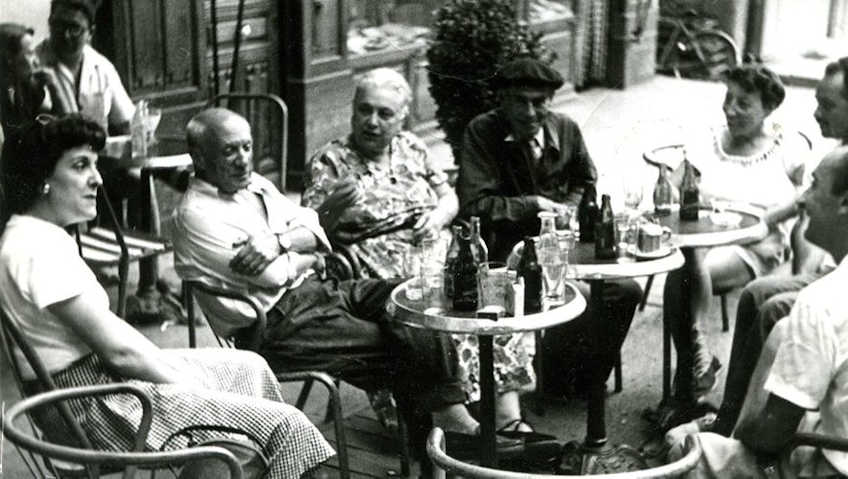 Picasso in Ceret, Southern France, 1913Pablo Picasso's home in Mougins is not open to visitors, as it remains a private residence. After his death, the property was bought by a Belgian art dealer.
In 2015, Notre Dame de Vie was put up for sale for €150m. There was some consternation that the interior of the property had been altered substantially since Picasso's time. But as anyone who has owned a house with an Avocado bathroom suite can confess, time does not stand still.
Musee Picasso Antibes France
Today there is an extensive museum dedicated to Picasso's life and work in Southern France, located in the nearby town of Antibes.
The museum is housed in the Grimaldi castle in Antibes, overlooking the Mediterranean sea. There is an historical reason why the museum is located here and not in Mougins, France.
In 1946, Pablo Picasso was provided with a studio space in the castle, which he worked in for two months. He produced a number of important works during this time, some of which he left at the castle. In 1957, Picasso received the title of "Honorary Citizen of the city of Antibes". In 1966, the Picasso Museum was founded at the castle and in 1990, Picasso's widow, Jacqueline, donated many art works and ceramics to the museum. Today the museum exhibits around 250 Picasso works, as well as paintings and sculptures from other contemporary artists.
You can find the Picasso Museum in Antibes at Château Grimaldi, Place Mariejol, 06600 Antibes, France. The museum is open from 10.00 to 13.00 and 14.00 to 18.00 every day.
Where to next . . . ?
If you are visiting the South of France this summer, then get the inside track on the best Places to see & visit in the South of France in 2026 (written by people who live in Southern France all year around). Read about the best restaurants to eat at, get local information on the best beaches to visit and discover the best tourist sites, markets and festivals to see during your stay.
|
|
|
|
|
|
|
|
|

Contact us by Email if you have any particular questions you would like to ask about visiting the South of France. If you liked the article then please share it with others using the Instagram and Facebook buttons. I wish you a wonderful stay in the South of France.


 The Southern French city of Beziers is enjoying a bit of a renaissance in its restaurant scene. Here...
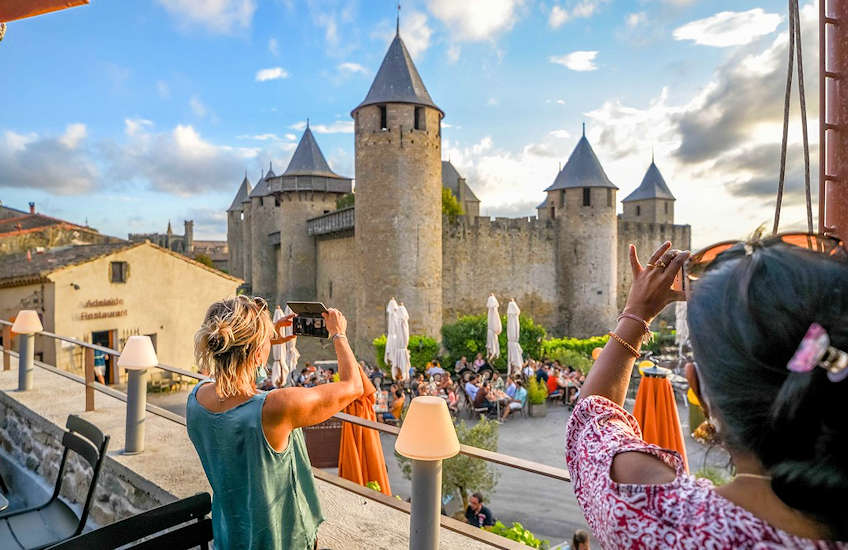 The beautiful medieval castle at Carcassonne is the second most-visited historical monument in...