
Outside of Paris, the best art museums in France are located on the Southern French coast. The South of France has been home to a wide range of famous artists throughout history - from Picasso to Van Gogh and Cézanne to Renoir.
Towns such as Aix-en-Provence, Antibes, Mougins, Arles, Montpellier, Toulouse, Collioure and Ceret all boast an impressive art heritage.
Best art galleries in South France
It is amazing how many well-known artists have either been born in the South of France, moved there during their careers or spent their final years in the area. We have a friend near to where we live who was a Fine Art lecturer and he has always said that there is something special about the bright light in the South of France that helps artists. It makes colours appear more vibrant and saturated—especially blues, greens and yellows.
In addition to the artists covered below, the South of France also played an important part in the development of the artistic careers of:
- The Scottish architect and artists, Charles Rennie Mackintosh, lived for the last 4 years of his life in Port-Vendres, sown by the Spanish border.
- The well-known French painter, Raoul Dufy, a leading light of the Fauvist movement, spent the last year of his life in the town of Forcalquier in Provence. He had moved from the north of France due to his severe arthritis which was restricting his painting. He is buried in the Cimiez Monastery Cemetery near Nice.
- The Italian painter and sculptor, Amedeo Modigliani, spent time in Cagnes-sur-Mer near Nice and his mother was from Marseille.
- The French artists and film-maker, Jean Cocteau, spent a long period of his life in the town of Menton, on the border with Italy. There is a museum in the town dedicated to his work and some of his bright frescoes are displayed at the Villa Ephrusi in Cap Ferrat.
- Claude Monet is often associated with the town of Giverny in Normandy, but during his time in Antibes he painted over 40 oil paintings and his painting La route rouge près de Menton (1884), is from this period on the French Riviera
We have listed below what we think are the best and most innovative art museums to visit in South France. These art galleries are located across the French Riviera, Provence and the Languedoc region - from Nice in the east down to Perpignan on the Spanish border.
1. Henri Matisse Nice France
 Henri Matisse Museum France [Photo courtesy of https://musee-matisse-nice.org/]The celebrated Modernist painter, Henri Matisse, spent the last few years of his life in South France in Nice. Matisse had been coming to the South of France for a number of years. During his early career, Henri Matisse lived in Toulouse (where both his children were born), before moving to Corsica. There is a small Musee Matisse in Nice which records his life and works in the city. The museum is housed in a beautiful red Genoese villa, situated in the Jardin des Arènes de Cimiez. Matisse died in Nice in 1954, at the age of 84.
During his time in Nice, Matisse used to visit his fellow artists Picasso and Chagall. He also spent a large amount of time canoeing and rowing at the Club Nautique in Nice. Matisse also developed a strong religious faith during his later years and he built a small chapel in Vence, just a few miles away.
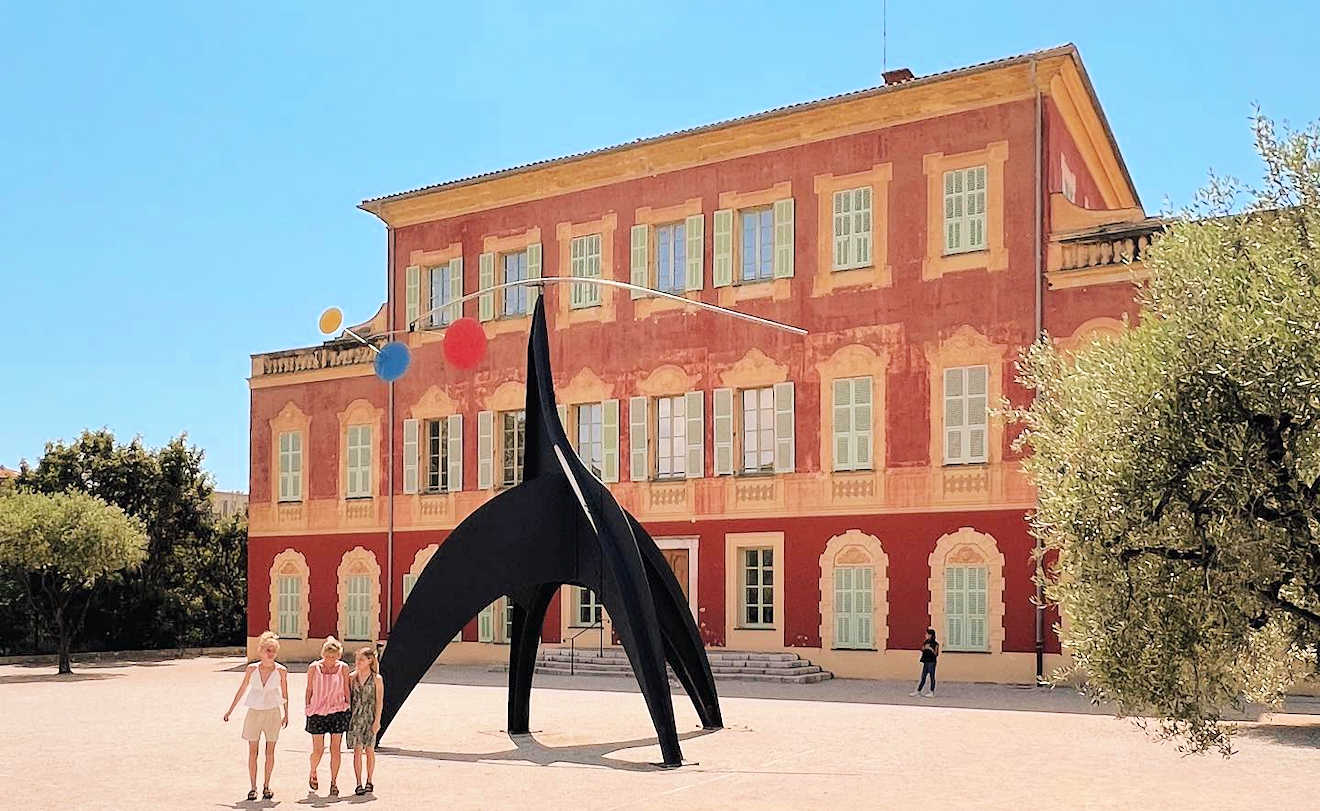
Henri Matisse is acknowledged as the most influential painter in the Fauvist movement. which featured artists known for their vivid painting style. In 1905, Matisse exhibited paintings at the Paris Salon d’Automne exhibition in alongside Derain, Maurice de Vlaminck, Kees van Dongen and Albert Marquet. The exhibition caused a real stir and the artists were labelled "savages" ('fauves' in French) by the art critic, Louis Vauxcelles. The label stuck and henceforth the collection of artists became known as the Fauvists.
Matisse often joined the painter, André Derain and the sculptor, Maillol for a number of summers between 1905 and 1914, in the coastal town of Collioure in Southern France, close to the Spanish border (see Collioure Modern Art Museum below).
Musée Matisse Nice France
Address : 164 Avenue des Arènes de Cimiez, 06000 Nice
Telephone : +33 04 93 81 08 08
Website : Musée Matisse.
2. Marc Chagall art museum Nice France
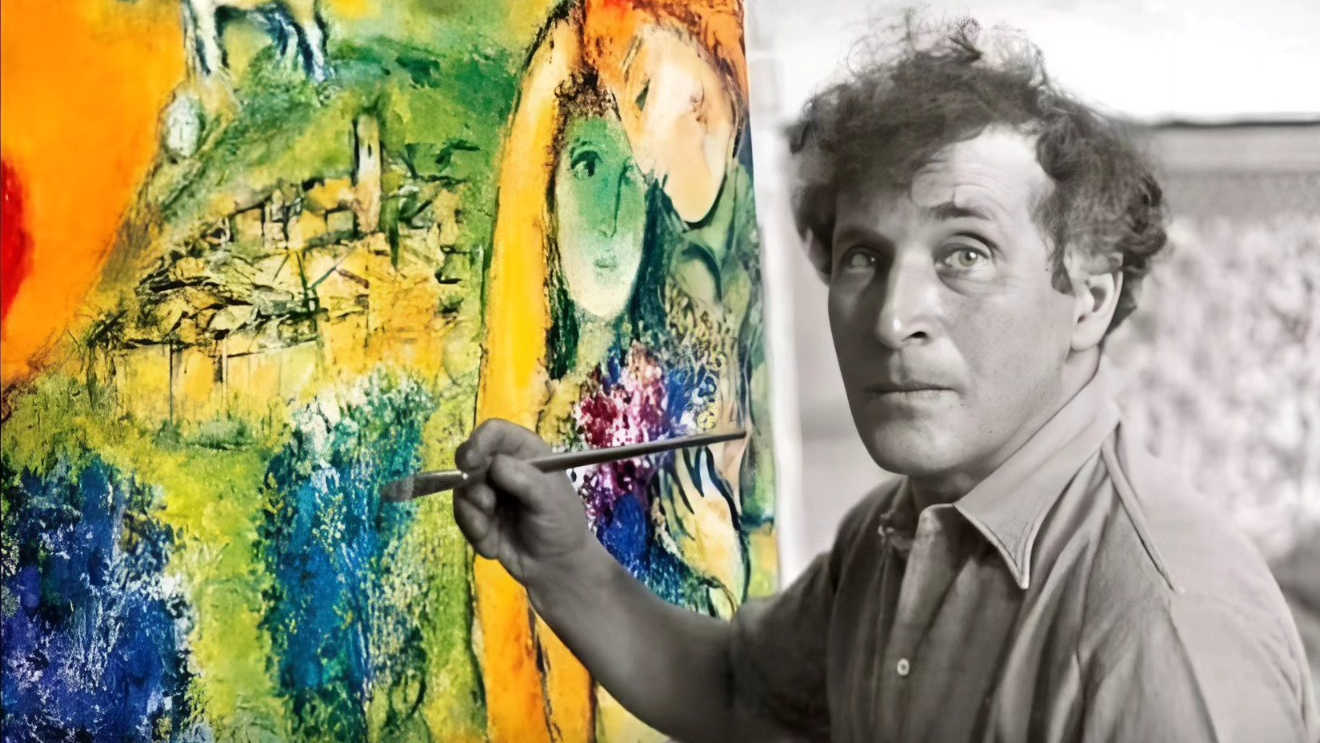 The famous artist Marc Chagall, lived in St Paul de Vence near Nice, France, for a large part of his later life. He first visited the Cote d'Azur in 1925, but he had to make a quick escape to New York following the Nazi invasion of 1941.
Chagall returned to the Cote d'Azur at the end of World War II and set up full-time residence in St Paul de Vence (close to his friends and fellow painters, Picasso and Matisse). Whilst he was living near Nice, Chagall created the amazing blue stained glass piece "American Windows"(1977); the giant mosaic "The Four seasons" (which is now displayed at the Marc Chagall Museum in Nice) and the painting "Les Amants au ciel Rouge", with its fantastic red backdrop.
Marc Chagall died at his home in St Paul de Vence at the age of 97 in 1985. As part of his will, he bequeathed a number of paintings to the city of Nice, the result of which was the creation of the Marc Chagall art museum.
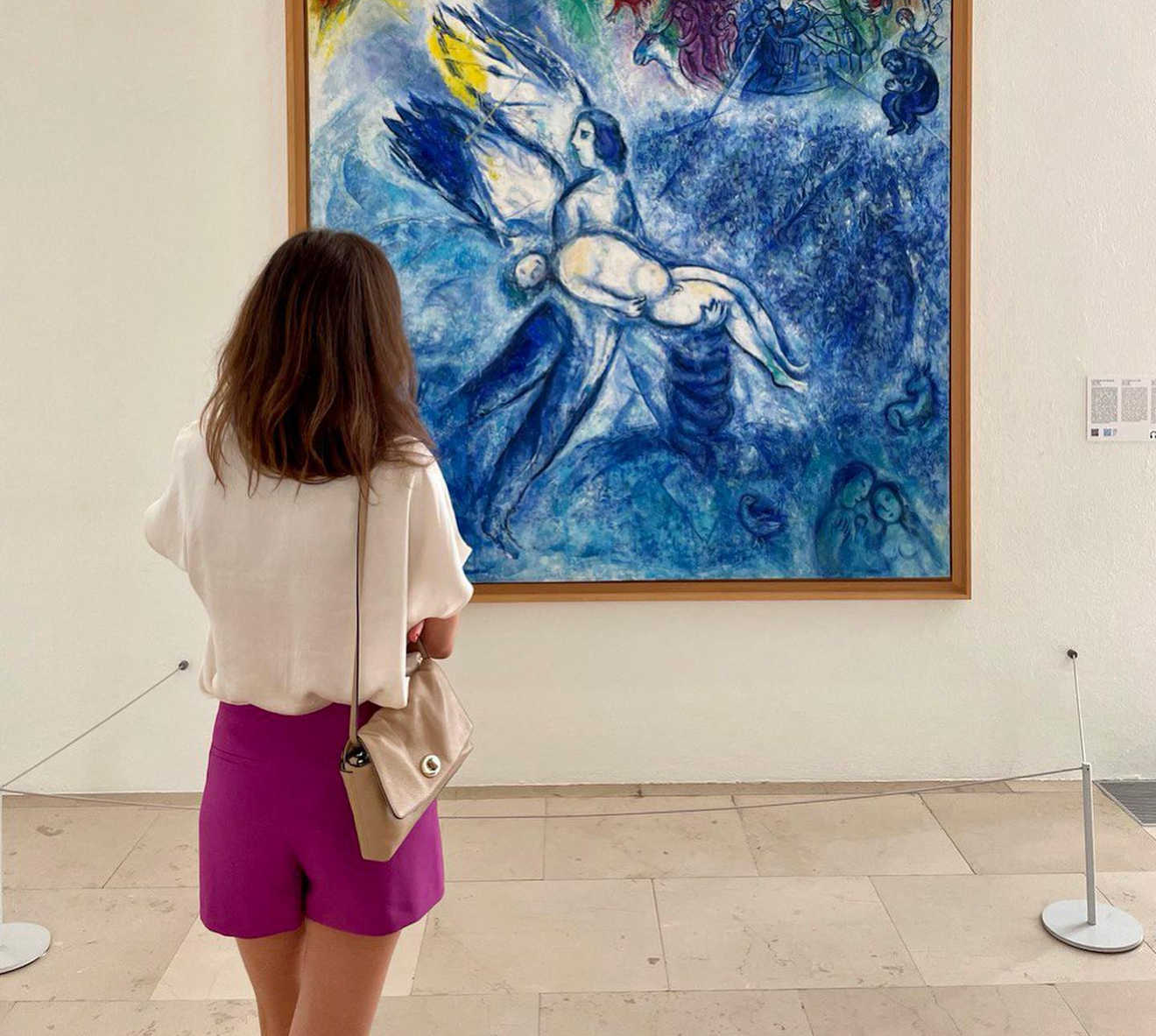
The art collection at the Marc Chagall museum is the biggest public collection of art works by Marc Chagall in the World. The museum is organised around the set of paintings produced on the Old Testament themes. The main attraction is the twelve large paintings illustrating the first two books of the Old Testament (Genesis and Exodus). Other rooms in the museum house compositions based on other Old Testament books.
Marc Chagall is often celebrated for his earlier work whilst he stayed in Paris. Paintings such as "The Promenade", "Paris Life through a Window" and "Self-Portait with Seven Fingers", marked out his distinctive abstract style and use of colour.
Musee Marc Chagall Nice France
Address : Avenue Docteur Ménard, Nice, France.
Opening hours : 10:00-18:00 (May to October); 10:00 -17:00 (November to April); closed Tuesdays.
Ticket prices : Adults €8.00 euros; Children €6.00 euros.
Website: www.musee-chagall.fr
3. Musée Renoir - Cagnes Sur Mer, French Riviera
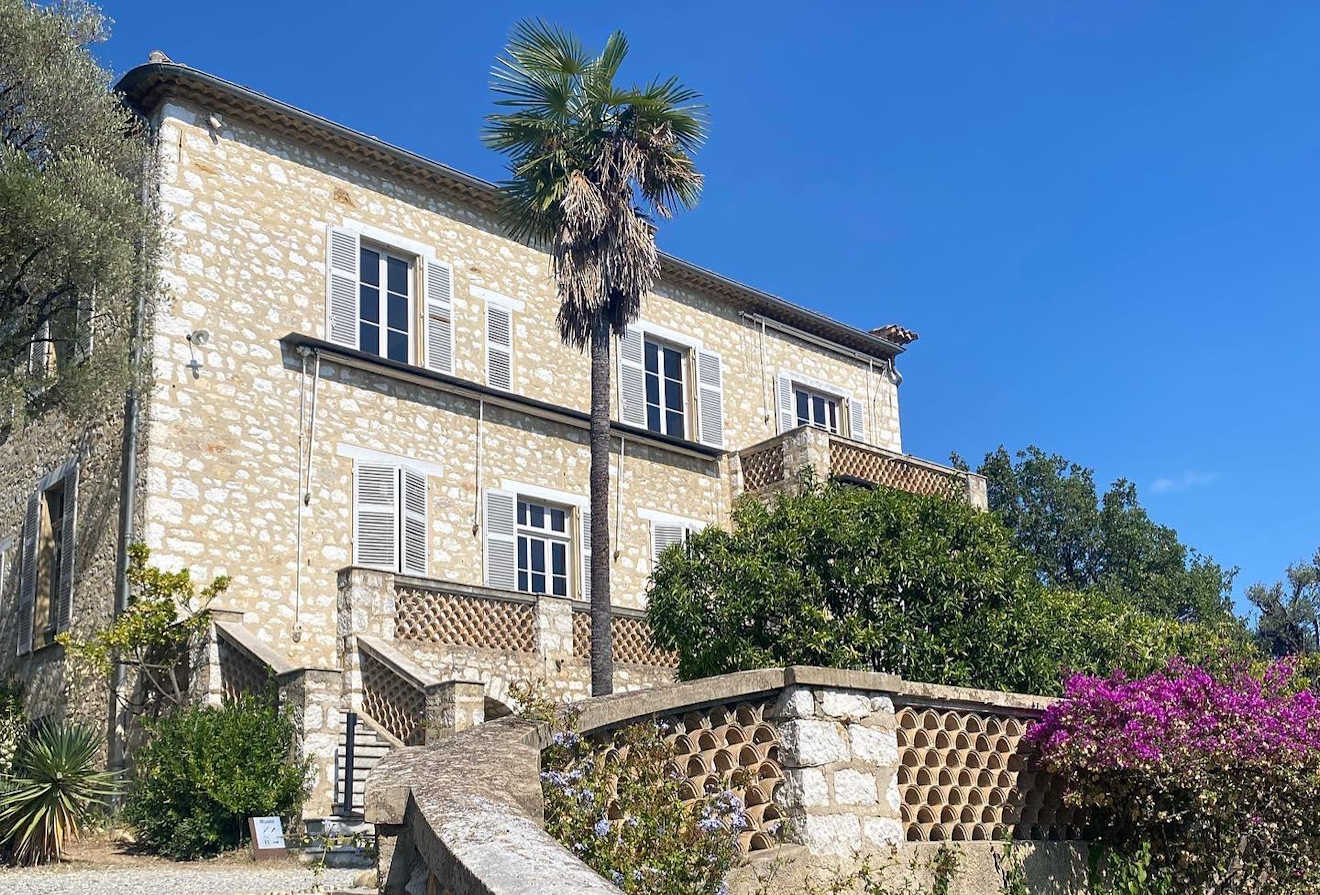 Musee Renoir Cagnes-sur-Mer, South FranceThe small coastal resort of Cagnes-sur-Mer, located close to Nice airport on the French Riviera coast, was a place that the artist Pierre-Auguste Renoir, spent a lot of his time. Renoir had made many trips to the South of France in the 1880s, often to visit his friend, Paul Cézanne.
Renoir was a friend and contemporary of the impressionist painters Claude Monet and Frédéric Bazille. He loved the light in the South of France and in 1903, he bought a small farmhouse, the Domaine des Collettes, in Cagnes-sur-Mer and turned it into his own Impressionist studio. By this time he was 62 years old and his health was beginning to cause him concerns. He often credited the climate in the South of France with prolonging his life and allowing him to continue painting and increasingly, devoting more time to sculpture.
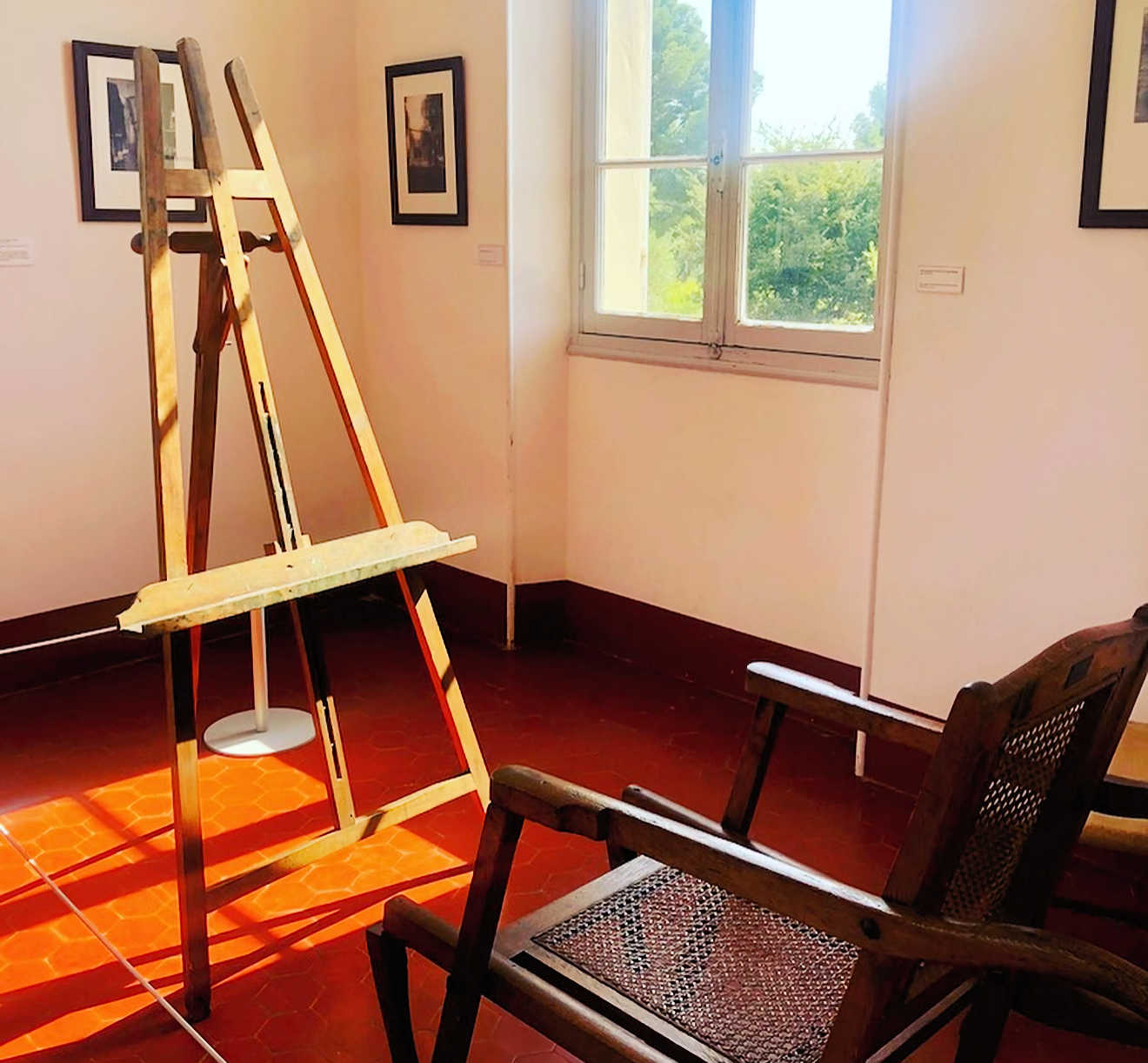
You can still visit that Renoir's home today (Musée Renoir) and see his original paints hanging on his walls unprotected as they were when he first strung them up. The art works he produced during his time in Cagnes-sur-Mer were mainly portraits, nudes, still life's and mythological scenes.
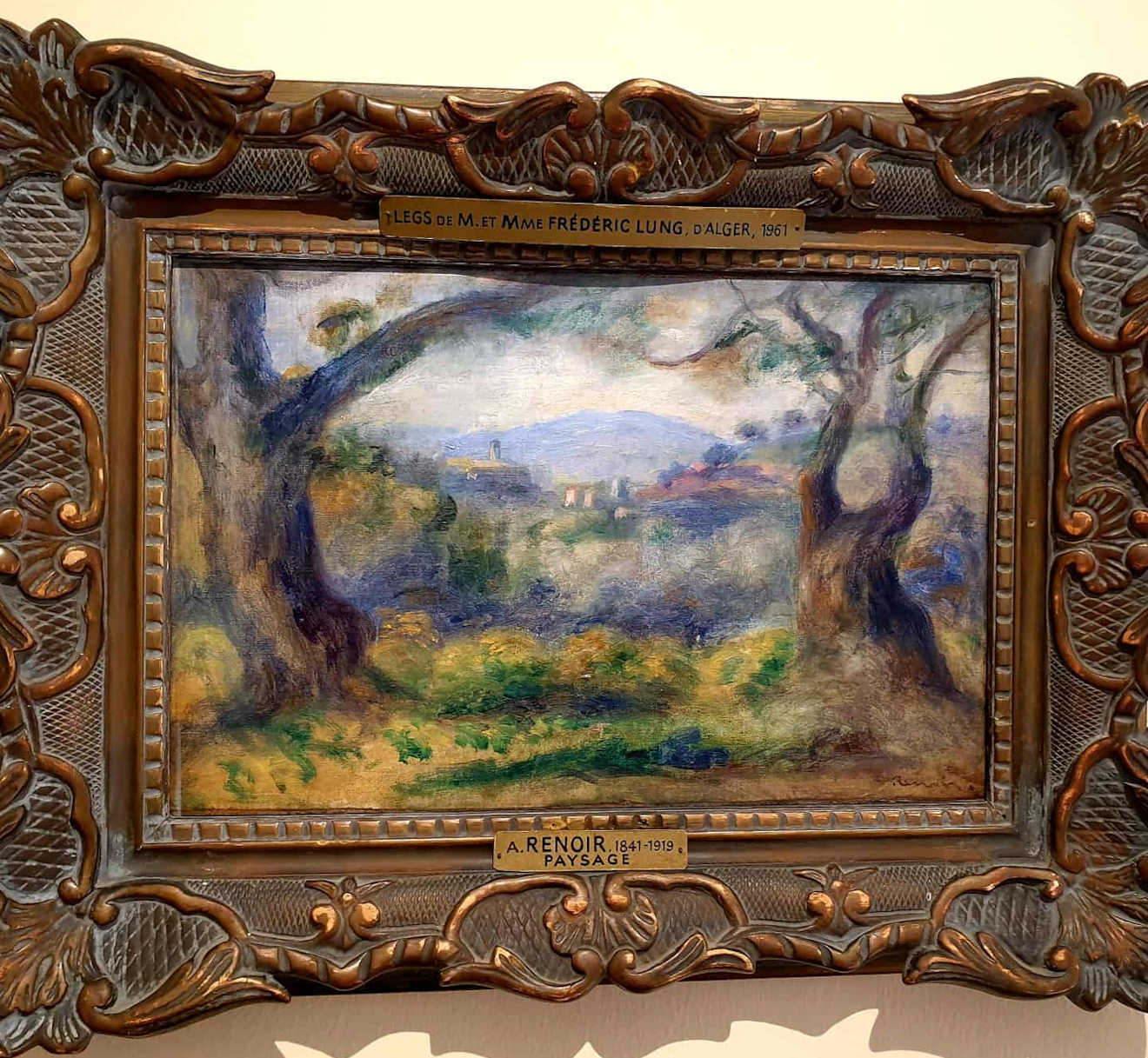
Despite becoming a very well-known (and rich) artist during his time in Cagnes-sur-Mer, Renoir still lived a very simple life with his wife and children. Renoir died at Cagnes-sur-Mer on 3 December 1919, a few weeks after visiting the Louvre in Paris for the last time.
Musée Renoir Cagnes-sur-Mer
Address : 19 Chemin des Collettes, 06800 Cagnes-sur-Mer
Phone : +33 4 93 20 61 07
Opening hours : 10.00 to 13.00 and 14.00 to 18.00 (summer); 10.00 to 12.00 and 14.00 to 17.00 (winter)
Website : Musée Renoir
4. Villa Ephrussi de Rothschild art museum Cap Ferrat, Cote d'Azur
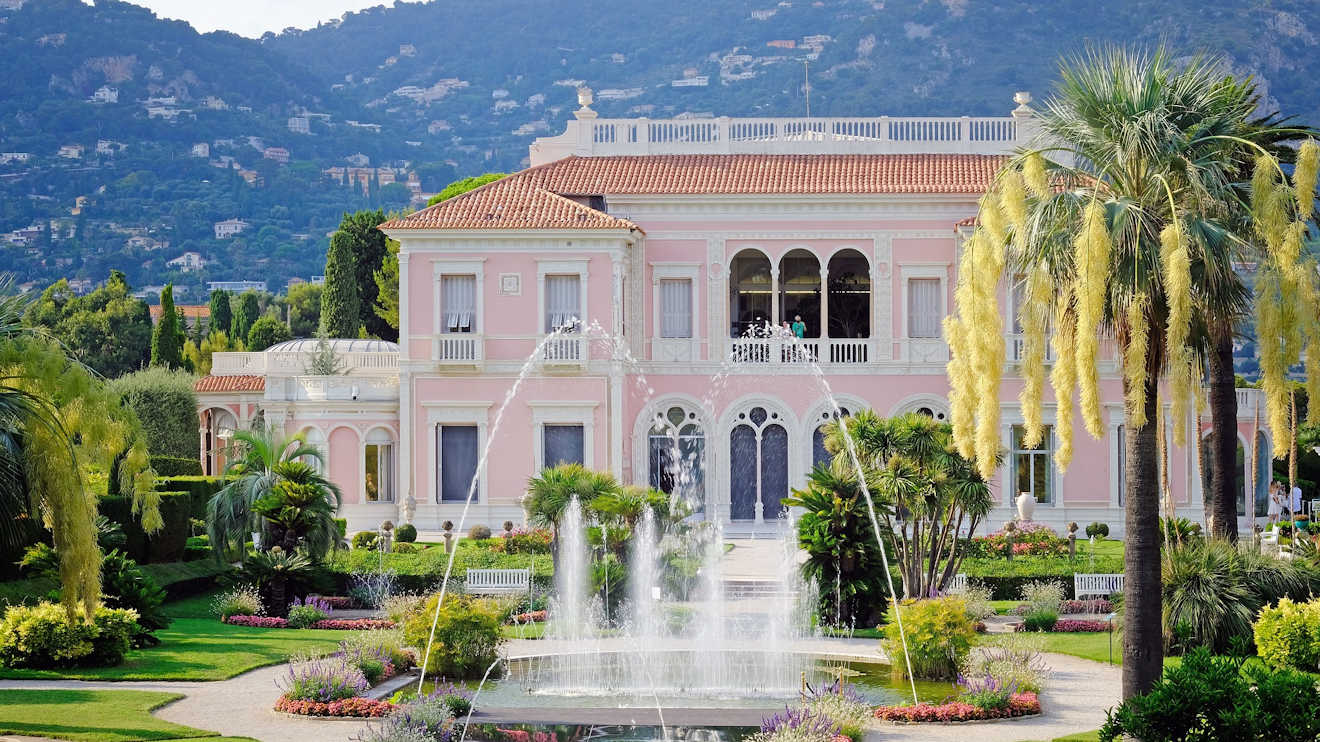
Villa Ephrussi de Rothschild in Saint-Jean-Cap-Ferrat, Côte d’Azur, is one of the most famous art museums on the French Riviera. The art museum is housed in a stunning pink coloured palace, which dates back to the Belle Époque era of France. The palace was owned by Baroness Béatrice Ephrussi de Rothschild, a passionate art collector. The villa became a public art museum in 1996, and showcases the Baroness' eclectic taste in art from Old Master paintings to modern pieces. There is also a collection of opulent French furniture from the 18th Century, as well as French tapestries (from Aubusson) and fine porcelaine pieces from Vincennes.
The interior of the palace features sumptuous salons, with a ceiling paintings, and rooms adorned with luxury furniture collected from the Louvre and Palace of Versailles. The villa is surrounded by elaborate themed gardens, including a Japanese garden and a rose garden. The gardens have been officially classified as one of the Remarkable Gardens of France.
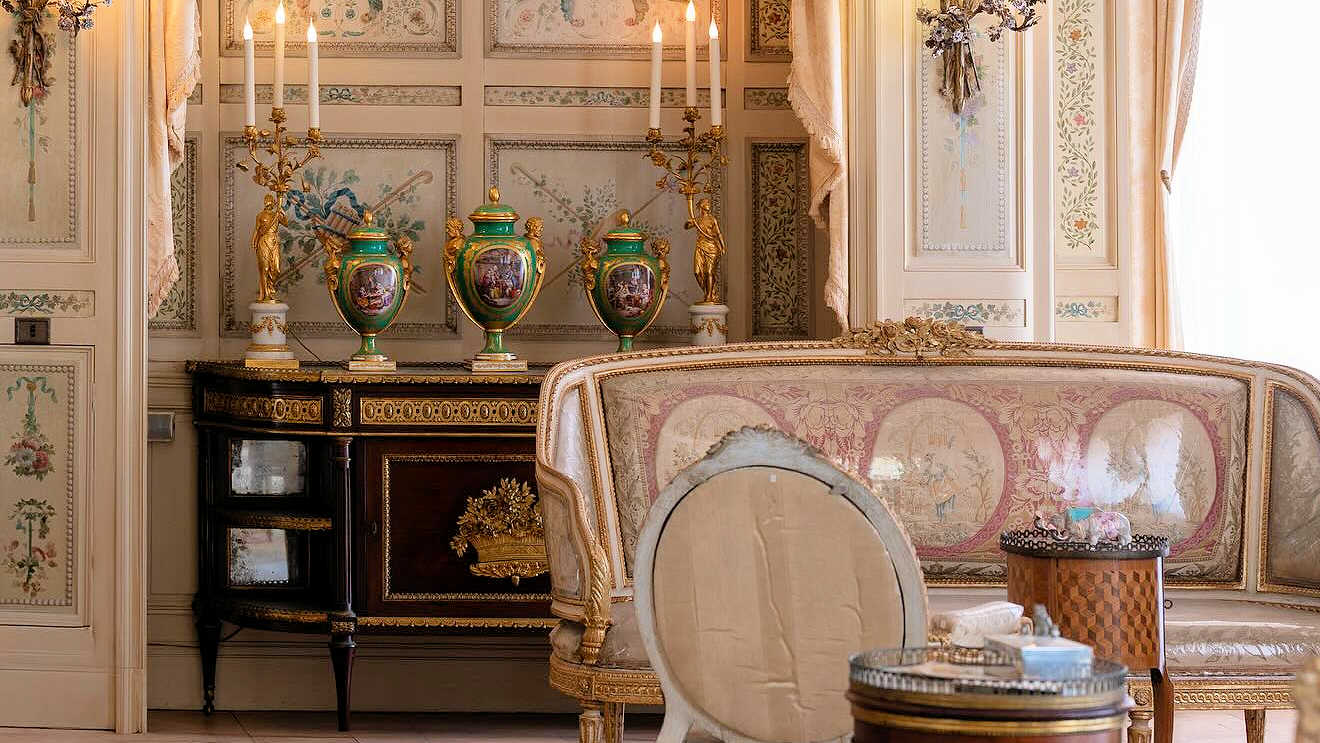
Cap Ferrat, is an exclusive peninsula on the French Riviera, once the home of King Leopold II of Belgium. The area is the epitome of unspoilt French Riviera glamour. The Rothschild banking family lived here from the turn of the 20th Century and Beatrice Rothschild was once the world's greatest art collector.
After leaving Villa Ephussi, make a little trip to the chapel Saint Pierre Des Pecheurs in Cap Ferrat and see the bright frescoes by the French artist, Jean Cocteau.
Villa Ephrussi de Rothschild
Address : 1 Avenue Ephrussi de Rothschild, 06230 Saint-Jean-Cap-Ferrat, France
Phone : +33 4 93 01 33 09
Opening hours : 10:00 AM – 6:00 PM (extended to 7:00 PM in July and August)..
Website: visit Villa Ephrusi for more information on the latest exhibitions
5. Saint-Paul-de-Vence - Fondation Maeght
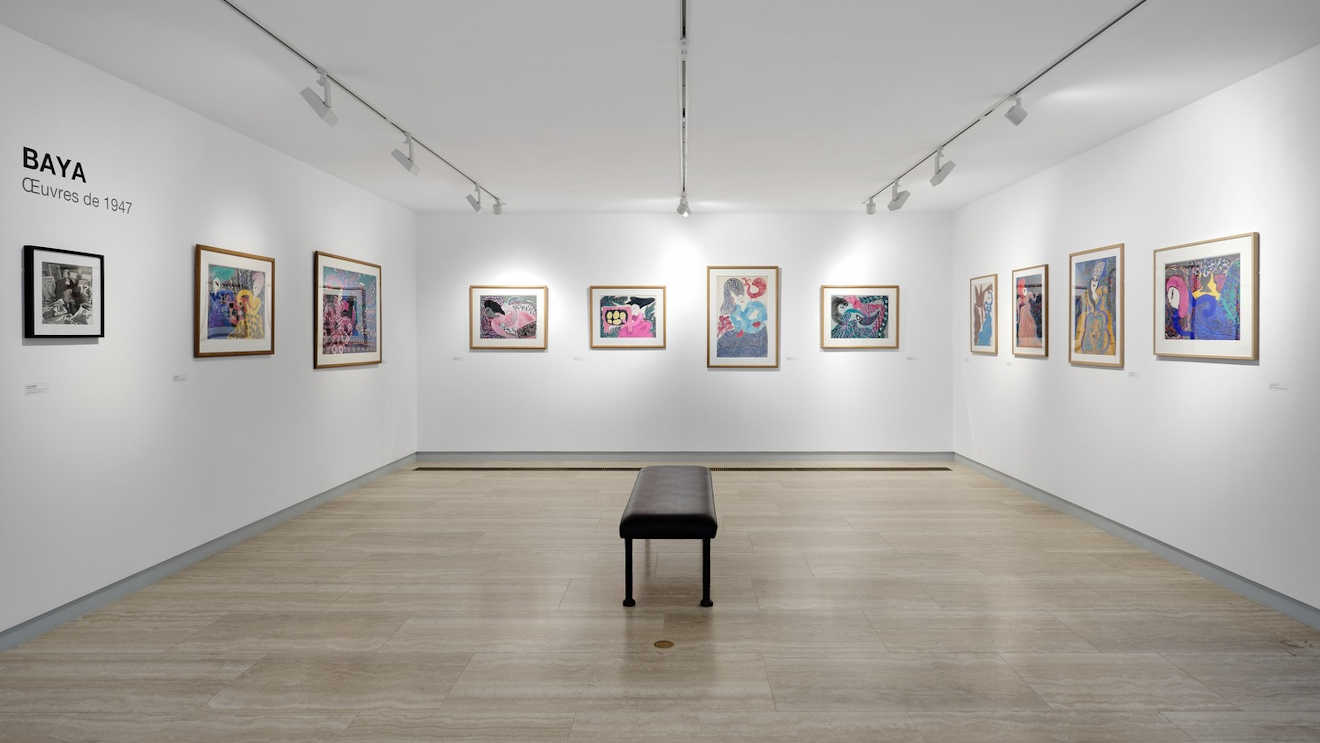
Set in the beautiful hilltop town of St-Paul-de-Vence above Nice, you will find one of the best collections of modern art in the South of France. Fondation Maeght is situated in a lush garden and features masterpieces by Chagall, Kandinsky, Balthus, and Alberto Giacometti. with sculptures arranged by the artists themselves. It’s a must-visit for modern art enthusiasts.
The Fondation Maeght was opened in 1964, and was modelled on American institutions such as the Guggenheim Foundation, the Barnes Collection and the Phillips Collection. The foundation was the brainchild of Aimé and Marguerite Maeght, who were local publishers and art dealers. Amongst their famous clients were Georges Braque, Joan Miró and Marc Chagall. They were able to turn personal tragedy (the death of their youngest son) into a positive art movement. The artist Georges Braque, suggested that they create a new space for displaying art in their property in the village of St-Paul-de-Vence, in the hills above Nice. The Catalan architect, Josep Lluis Sert, helped create the vision by collaborating with some of the greatest artists of the 20th Century. Georges Braque helped designed a pool; Marc Chagall, contributed large mosaic murals; Alberto Giacometti, created a sculptural courtyard; and Miró Labyrinth, curated a sculpture garden.
Today, La Fondation Maeght, has not only become one of the world’s leading cultural institutions, it is also one of the most beautiful spaces and gardens on the French Riviera.
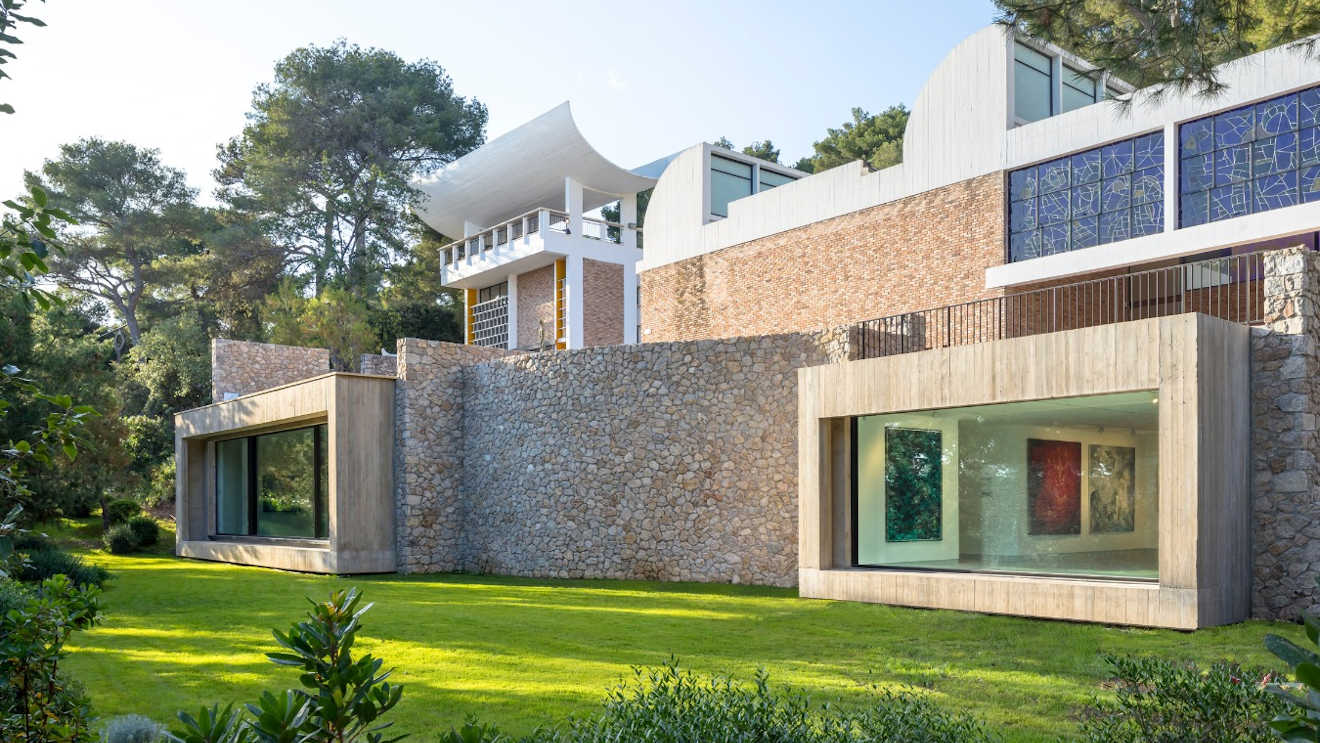 Foundation Maeght St-Paul-de-Vence [Photo courtesy of www.instagram.com/fondationmaeght]
Visitors can also enjoy the sculpture garden, which houses a rotating selection of works by Calder, Takis, Miró, Jean Arp and others, two rooftop terraces with spectacular views, galleries hosting temporary exhibitions and selected works from the permanent collection, a consecrated chapel, an art library and a gift and book shop.
Located 25 km from Nice, The Fondation Maeght is located 25 km from Nice and welcomes over 150,000 visitors every year to this unique architectural complex.
Fondation Maeght
Address : 623 Chemin des Gardettes, 06570 Saint-Paul de Vence, France
Phone : +33 4 93 32 81 63
Opening hours : The Foundation is open everyday from 10am to 6pm (10am to 7pm in July and August)
Website : visit Fondation Maeght for more information on the latest exhibitions
6. Antibes - Pablo Picasso in South France
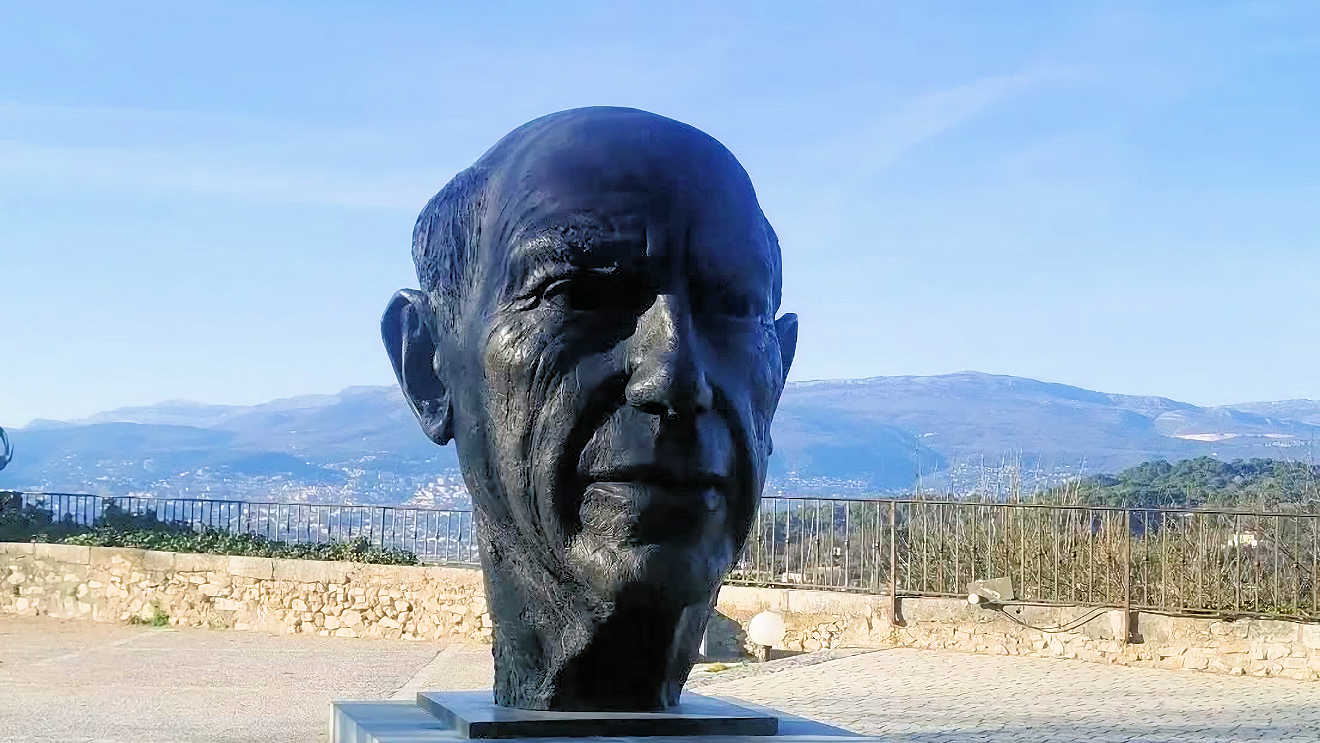
Perhaps the most famous artist to spend a considerable portion of his life in South France, was Pablo Picasso. Picasso had spent numerous summers on the Cote d'Azur during the 1920's, staying in Antibes, Cannes and Juan les Pins.
During the Spanish Civil War, Picasso moved from his residency in the Prado Museum in Madrid to stay in Mougins.
After moving down from Paris after the Second World War, Picasso lived for over 12 years in Vallauris, close to Cannes. During his time in Vallauris, Picasso developed a fascination with pottery (Vallauris was historically a clay quarrying town). Picasso also painted the main chapel in Vallauris with surrealist images depicting war and peace.
Picasso also spent time in Ceret, Perpignan and Collioure, close to Perpignan near the Spanish border. His estate have donated works to both the art museums located in these towns.
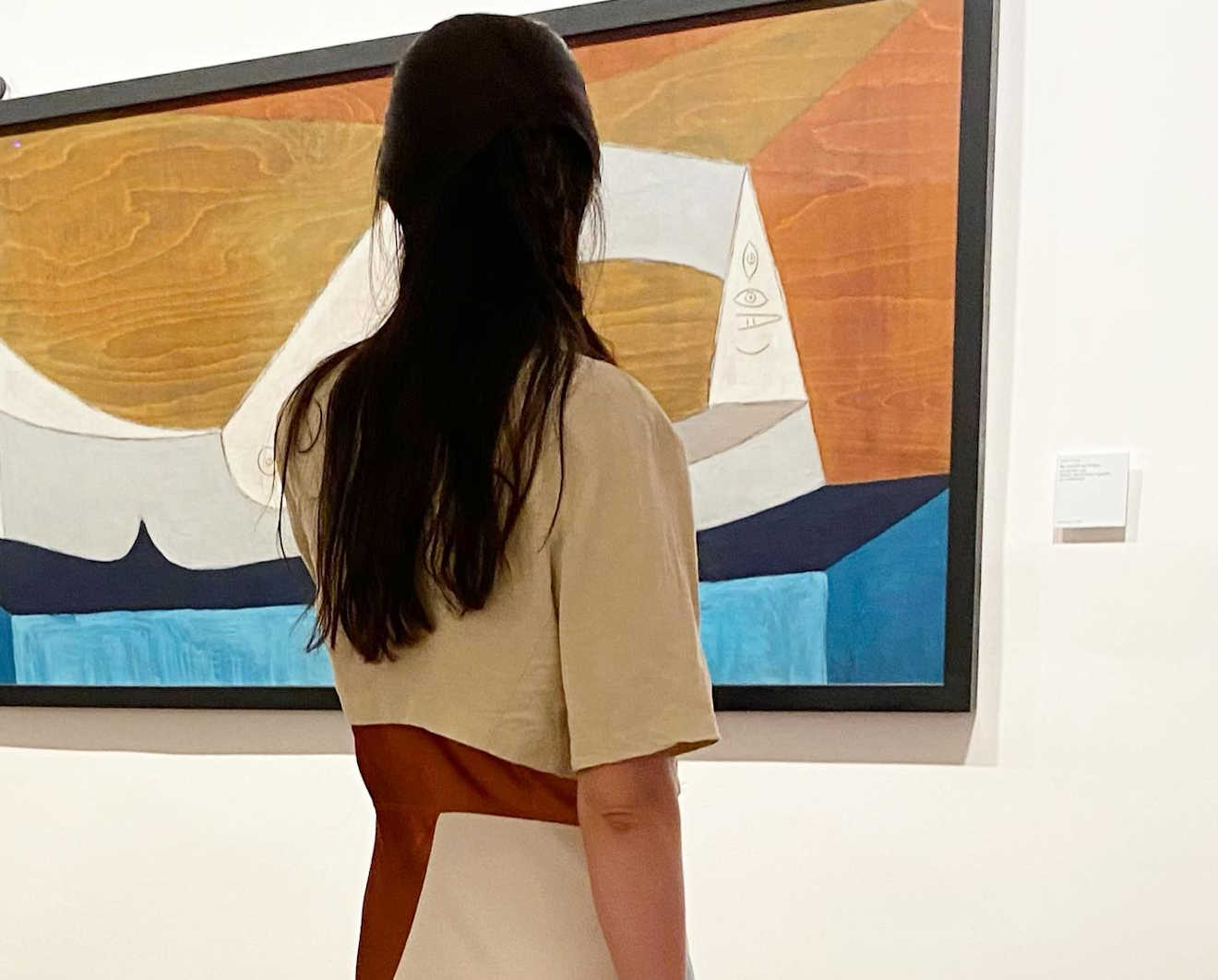
Picasso moved in his later life to Mougins (which was closer to his Doctor in the north of Cannes). Picasso died in Mougins on 8 April 1973. He was buried two days later in the grounds of the Castle of Vauvenargues close to Aix-en-Provence, in the Bouches-du-Rhône department, apparently after the Mayor of Mougins refused his burial in the town, referring to him dismissively as a "billionaire communist".
Today there is an extensive museum dedicated to Picasso's life and work in Southern France, located in the nearby town of Antibes. The museum is housed in the Grimaldi castle in Antibes, overlooking the Mediterranean sea. There is an historical reason why the museum is located here and not in Mougins, France.
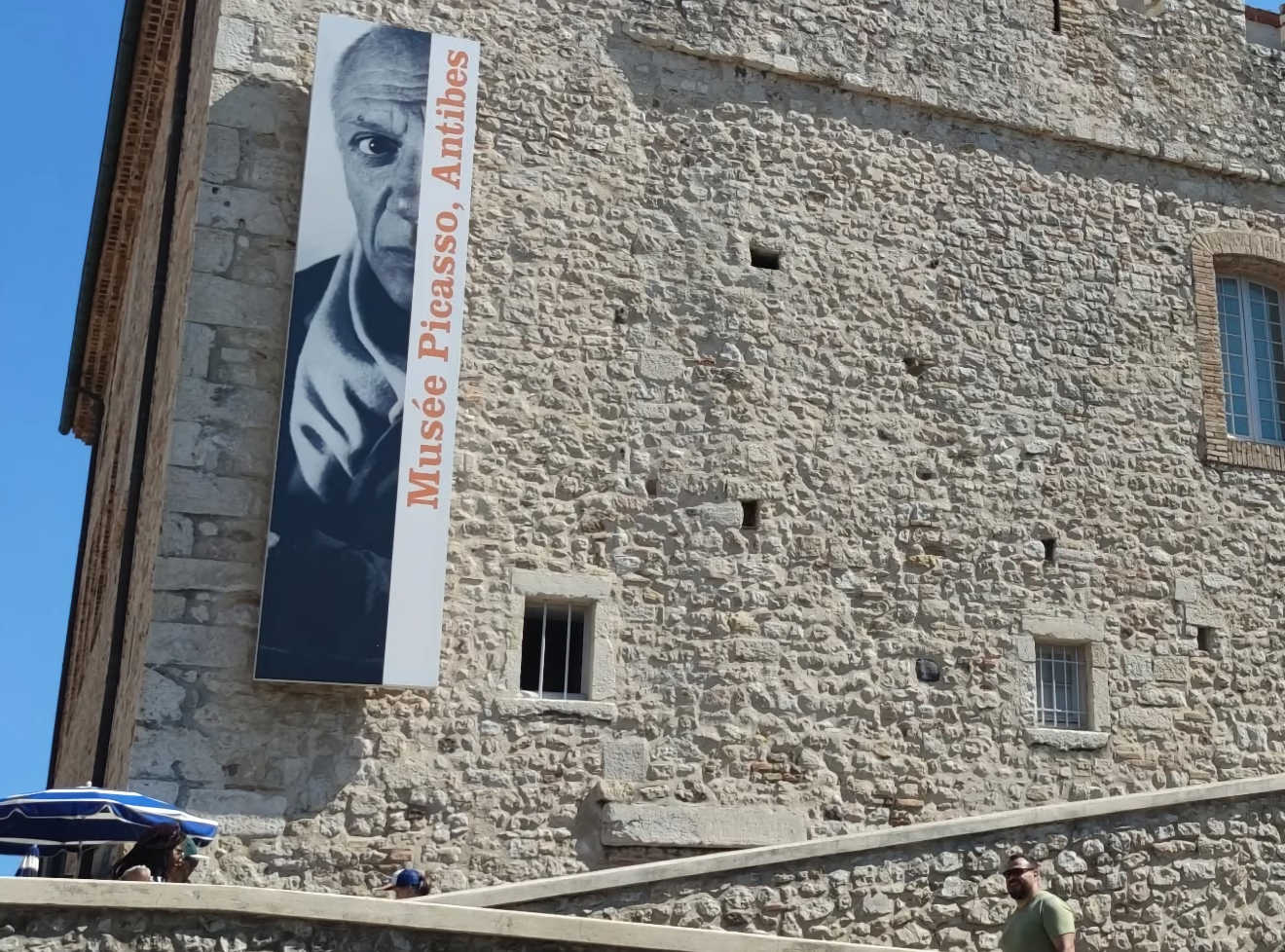
In 1946, Pablo Picasso was provided with a studio space in the castle, which he worked in for two months. He produced a number of important works during this time, some of which he left at the castle. In 1957, Picasso received the title of "Honorary Citizen of the city of Antibes". In 1966, the Picasso Museum was founded at the castle and in 1990, Picasso's widow, Jacqueline, donated many art works and ceramics to the museum. Today the museum exhibits around 250 Picasso works, as well as paintings and sculptures from other contemporary artists.
Picasso Museum in Antibes
Address : Château Grimaldi, Place Mariejol, 06600 Antibes, France.
Phone : 04 42 52 88 32
Opening hours : The museum is open from 10.00 to 13.00 and 14.00 to 18.00 every day.
Website: visit the Picasso Museum Antibes for more information
7. Mougins Classic Art Museum
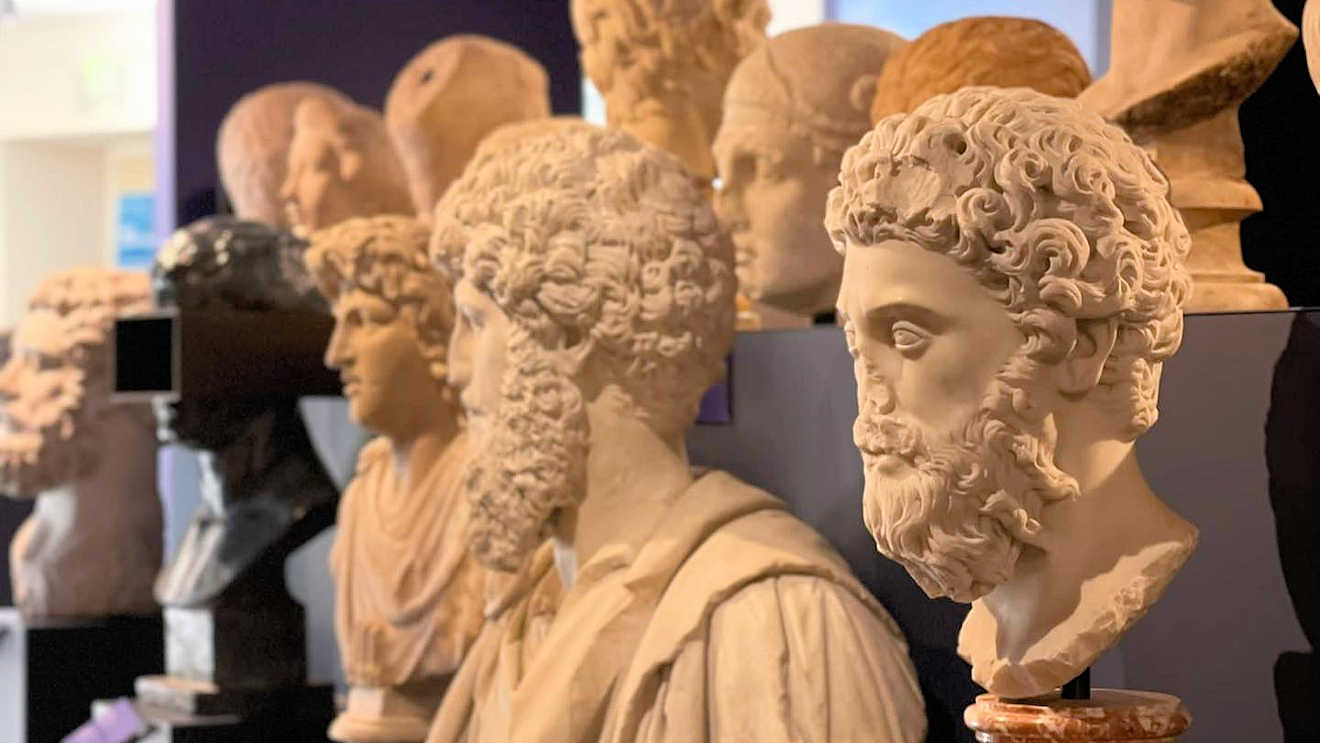
The Mougins Classic Art Museum (MACM), was established in 2008 by Christian Levett, a wealthy Hedge-Fund Manager and local resident of Mougins. Levett already had an enormous private collection of ancient and modern art and he was helped in establishing the Museum by the current Museum Director, Mark Merrony.
The Mougins art museum features works spanning 5,000 years of civilisation including artwork by Picasso, Matisse and Jean Cocteau; alongside collections of roman coins and ancient armour.
The Mougins Museum of Classical Art contains over 700 artifacts and artwork. The basement of the MACM houses the Egyptian Gallery. This contains the oldest dating relics such as funeral masks, a sarcophagus and various Egyptian artifacts. The Egyptian Gallery also features works by Marc Chagall, the American sculptor, Alexander Calder and the local french artist, Jean Cocteau.
On the ground floor of the Mougins Museum is the People and Personalities collection. This contains an arrangement of Greek and Roman statues and busts, as well as Modern sculptures by Marc Quinn and Damien Hirst. You will also find artwork by Henri Toulouse-Lautrec, Henry Moore, Francis Picabia, Paul Cezanne, Henri Matisse and the British Sculptor, Antony Gormley.
The first floor of the MACM in Mougins contains the Gods and Goddesses Gallery, with displays of Greek and Roman bronze and marble statues, pottery, glass and silverware. The gallery also features a collection of ancient coins and jewellery. Integrated within the displays are works by Flemish painter, Peter Paul Rubens; the French sculptor, August Rodin; the locally born Nouveau Realism French artist, Yves Klein; Andy Warhol, Picasso, Amedeo Modigliani and Salvador Dali.
On the top floor of the museum is the largest private collection of Greek and Roman Armour and armaments in the world. There is an extensive display of helmets, body armour and shields, alongside a range of military influenced art.
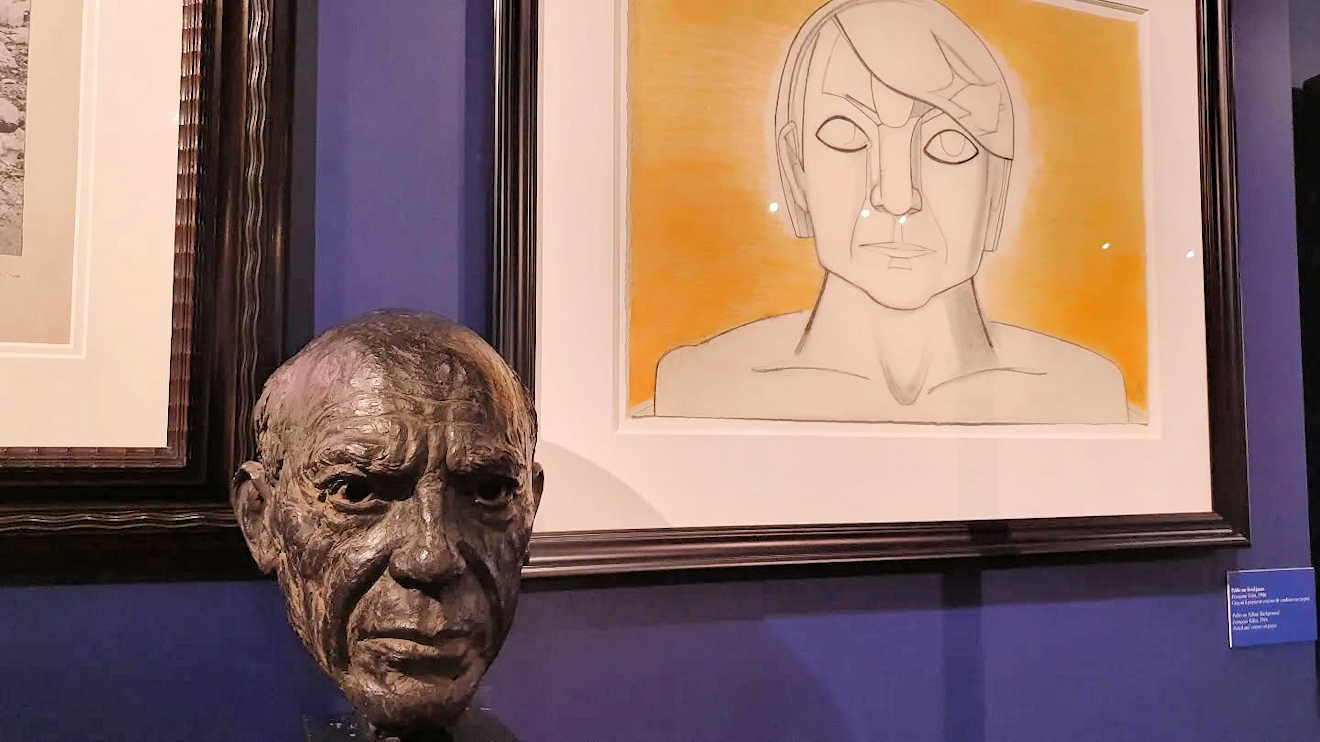 The Mougins Museum of Classical art is essentially a private collection open to the public. The museum is located in a medieval house in the centre of Mougins and the displays are spread over 4 floors, providing over 400m2 of display space.
Although the majority of objects on display are collections of ancient and neo-classical artefacts, the museum also includes works by artists who lived close to Mougins, such as Marc Chagall, Jean Cocteau, Man Ray, Henri Matisse and of course, Pablo Picasso.
The museum also features paintings and sculptures by Raoul Dufy, Cézanne, Andy Wharol, Damien Hirst and Anthony Gormley.
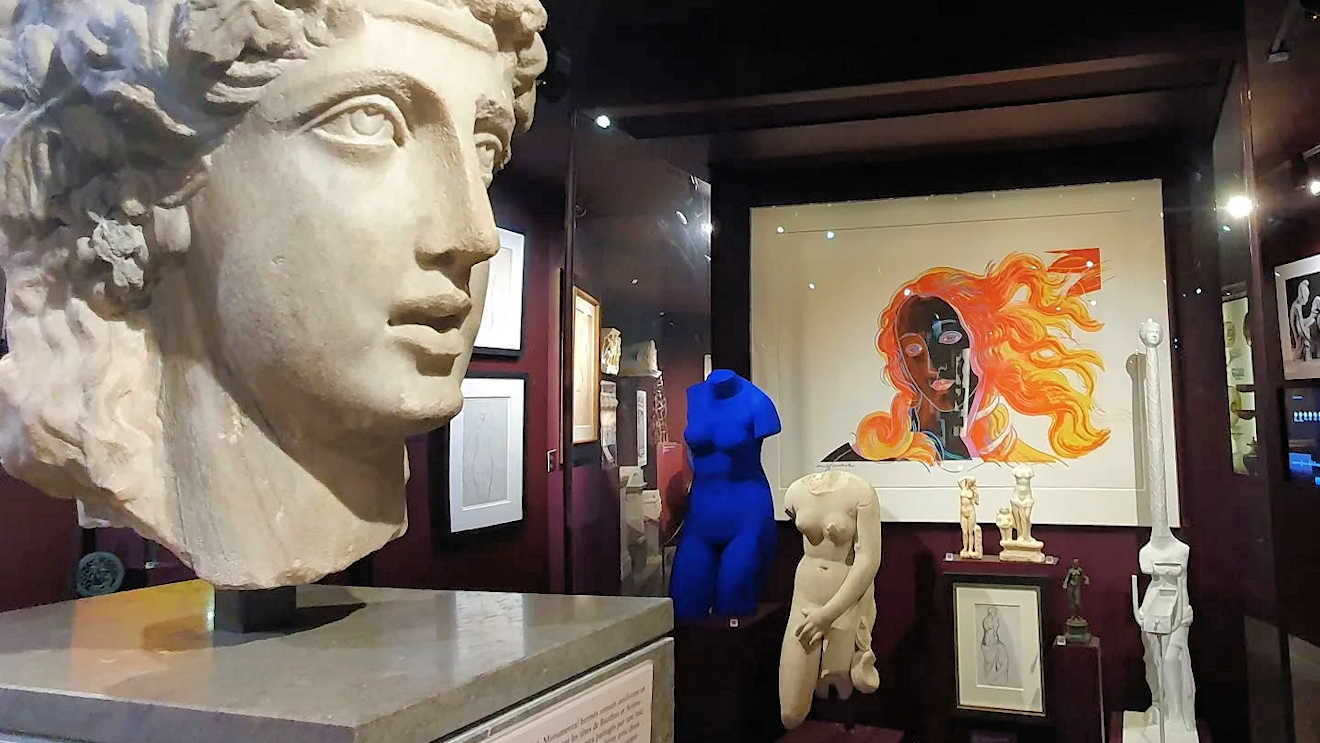
What is quite interesting is the way the Mougins museum is organised. Whilst the majority of the collections are arranged in chronological order, the modern art pieces are inserted among the displays. Thus you have Andy Wharol's Birth of Venus, next to an ancient statue of Venus; and the bust of the Emperor Caracalla alongside a drawing by Henri Matisse of the same bust.
Mougins Classic Art Museum
Address : 32 Rue du Commandeur, 06250 Mougins, France
Phone : +33 4 93 75 18 22
Opening hours : 12.00 to 18.00; Tuesday to Sunday.
Website : visit MACM for more information on the Classic Art Museum in Mougins
8. Paul Cézanne in Aix-en-Provence - Musée Granet & L'Atelier des Lauves
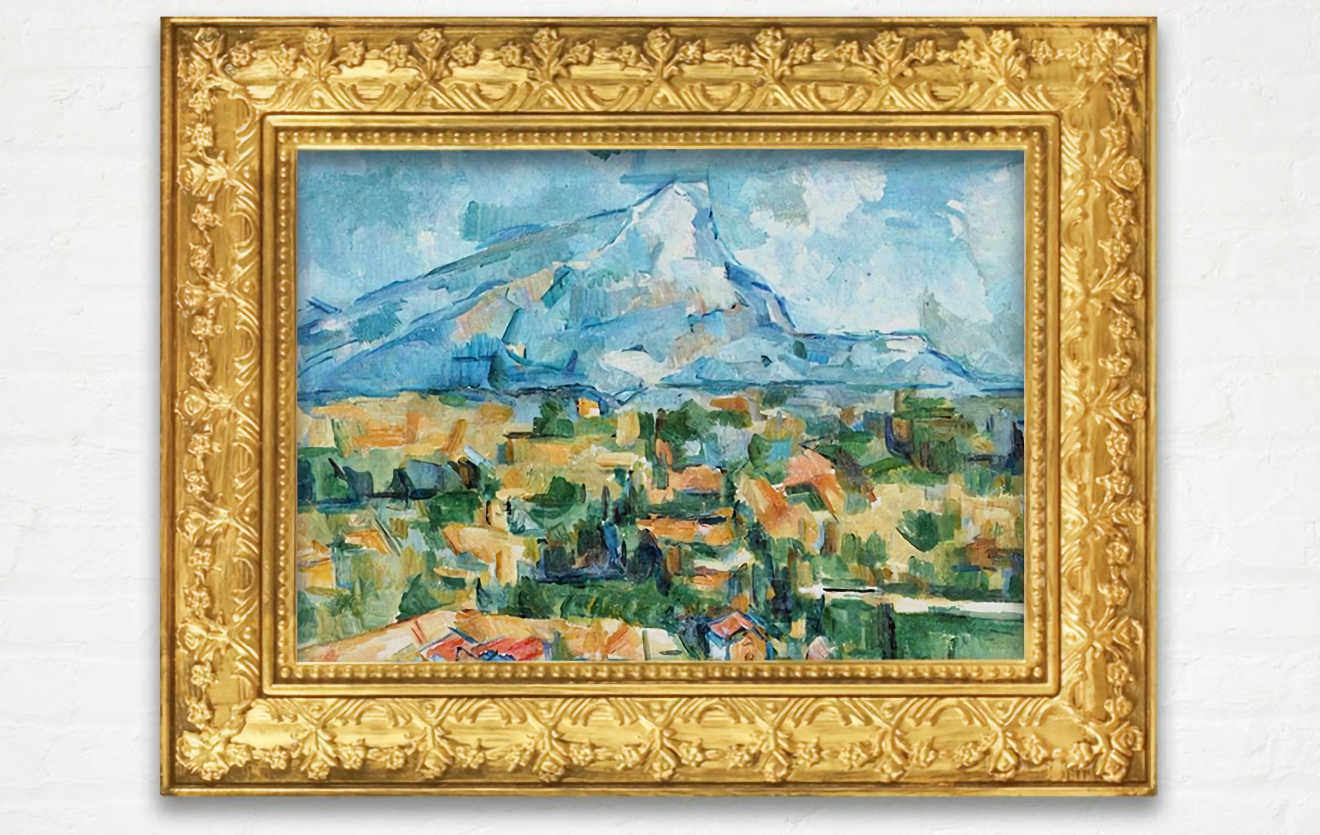
2025 was the centenary of the death of the artist Paul Cézanne. Major exhibitions were held in his home city of Aix-en-Provence and in prelude to the anniversary, major renovations were made to a number of museums, gardens and art galleries dedicated to his work.
Paul Cézanne was born in the beautiful Southern French town of Aix-en-Provence on 19 January 1839. During his early years, the Cezanne family were quite poor. His father was a hat maker and his mother worked in a factory. But during his teenage years, Cezanne's father became quite wealthy after he had started a bank in the town. Cezanne was a childhood friend of the writer Emile Zola. Cézanne attended drawing classes at an Art School in Aix-en-Provence, before going on to study law at Aix-en-Provence university.
After moving to Paris, Cezanne became a contemporary of Claude Monet, Renoir, Manet and Pissaro. He returned regularly to Aix during his lifetime and he set up a permanent studio there in 1902. The Mont Sainte Victoire, mountain range, which forms the backdrop to Aix-en-Provence, features in a number of Cezanne's paintings throughout his career. Cézanne was only moderately successful during his career (and Emile Zola helped to support him financially various stages during his life). Despite sending individual paintings to the annual Salon des Indépendants art exhibition in Paris from 1899, it was only in 1904, 2 years before his death, that he was given an entire room at the Salon in 1904. In later years after his death, Cezanne became regarded as the "Father of Modern Art".
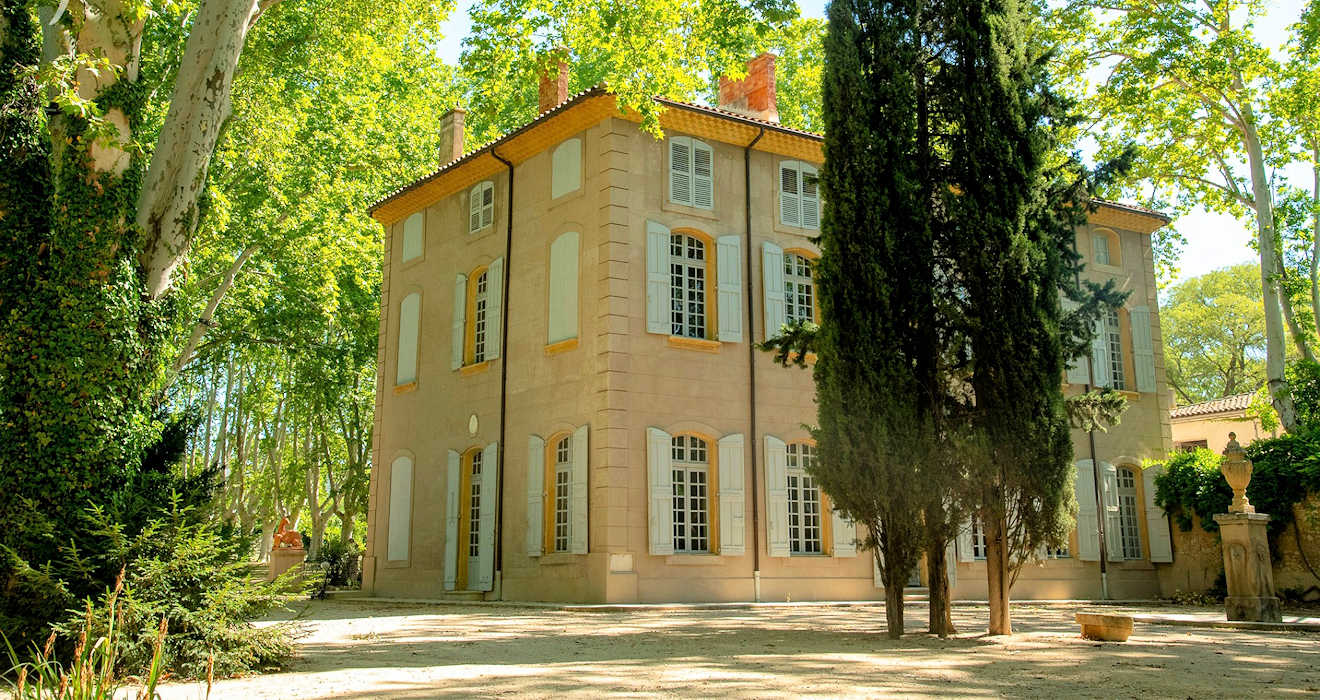
Jas de Bouffan, close to Aix-en-Provence, was Cézanne’s family estate during his teenage years. During 2025, a major exhibition was held at Jas de Bouffan, featuring over 130 of Cézannes works, including many which highlighted his connection to the property. Jas de Bouffan, has now been listed as an historical monument in France and there are guided tours of the house and its 12 acre of grounds, including Cézanne’s first studio.
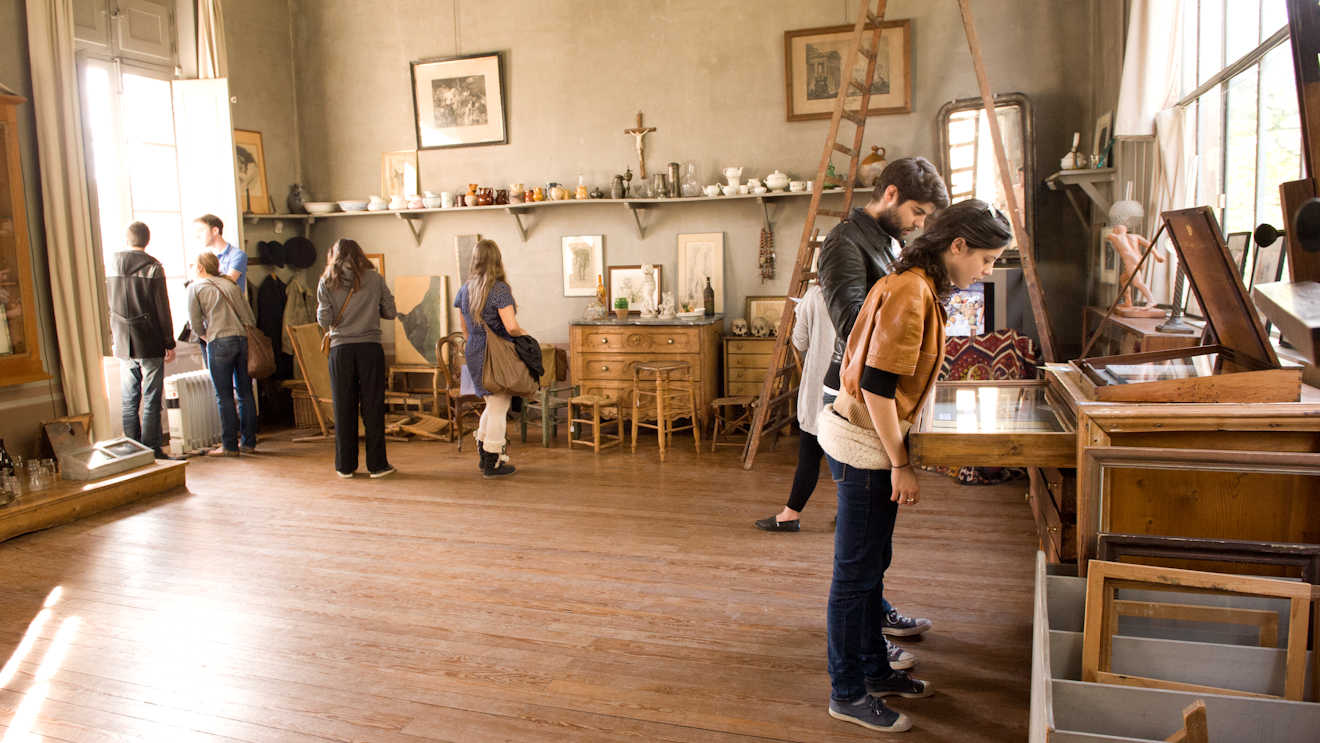 L'Atelier des Lauves Cézanne's art studio Aix-en-Provence [Photo courtesy of www.aixenprovencetourism.com]
Cézanne's last art studio in Aix-en-Provence, L’Atelier des Lauves, is a museum dedicated to showing how the painter lived and worked. Cezanne built the home in 1901 and he lived and worked here until his death on 22 October 1906.
The studio was where Cézanne painted a number of his most famous works, including his masterpiece, "Les Grandes Baigneuses" (1906). You can visit the his workshop, living room, kitchen, as well as the Provençal garden, which has been carefully restored to create the same planting and views that Cezanne would have experienced during the last few years of his life.
L’Atelier des Lauves
Address : 13 Avenue Paul Cézanne, 13100 Aix-en-Provence, France.
Admission : €9.50 euros (adults); €7.50 (children). Guided tours last around 1 hour 30 mins and places must be reserved in advance.
Website : Cézanne's L’Atelier des Lauves Studio
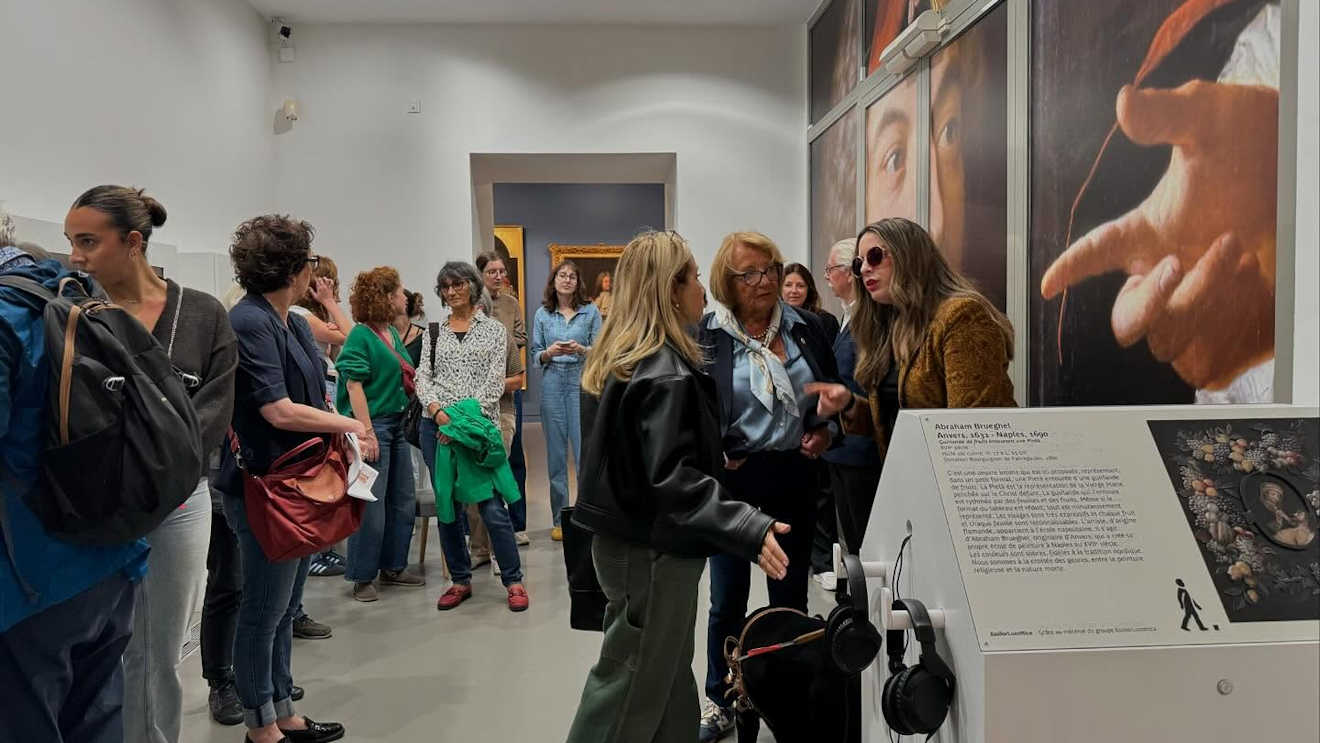
The Granet Art Museum in Aix-en-Provence displays 9 works of Cézanne in a special collection. These works include "Waterfall", "Portrait of Émile Zola" (the only known portrait of the writer by Cézanne), "The Sainte-Victoire Mountain" "Portrait of Madame Cezanne" and "Les Baigneuses in front of Sainte-Victoire mountain". The Musée Granet also features a number of works from by Pablo Picasso; the Swiss sculptuor, Alberto Giacometti; the French painter and sculptor, Fernand Léger; and the Swiss-German artist, Paul Klee.
Granet Museum
Address : Place Saint-Jean de Malte, 13100 Aix-en-Provence, France
Phone : 04 42 52 88 32
Opening hours : 12.00 to 18.00; Tuesday to Sunday.
Website: Musée Granet
9. Arles South France - Vincent van Gogh & Paul Gauguin
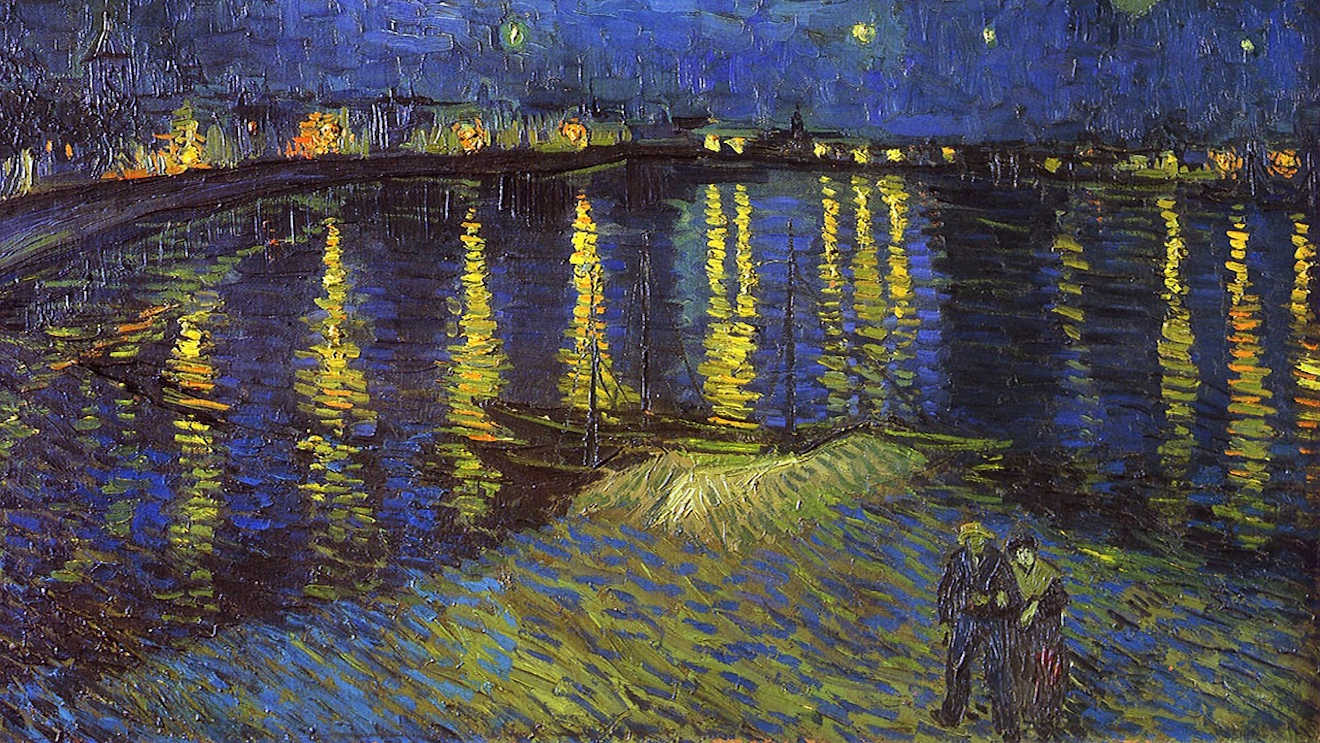 Vincent van Gogh arrived in the Southern French town of Arles in 1888. During the 12 months van Gogh stayed in Arles, he produced an incredible 187 paintings and drawings, including some of his famous masterpieces such as: The Sower, Bedroom in Arles, The Night Cafe, The Café Terrace on the Place du Forum, Starry Night over the Rhone, Vase with 12 Sunflowers, Van Gogh's Chair and Self-portrait with Bandaged Ear.
Van Gogh was later joined by the painter Paul Gauguin and he also enjoyed a productive spell in the South of France. It is estimated that between them, the art works produced by van Gogh and Gauguin in Arles have a total value of over $1.5bn. What is even more amazing is that during this period, neither of these famous artists managed to sell any paintings at all
See our article on Van Gogh in Arles, South France for more details.
If you love art or history then Arles in South France is definitely a place worth visiting. The combination of Roman artefacts and the scenes of van Gogh's paintings are enough to draw you to this beautiful city and keep you in Arles for the whole day. Amongst the sites to see include:
Arles Espace Van Gogh
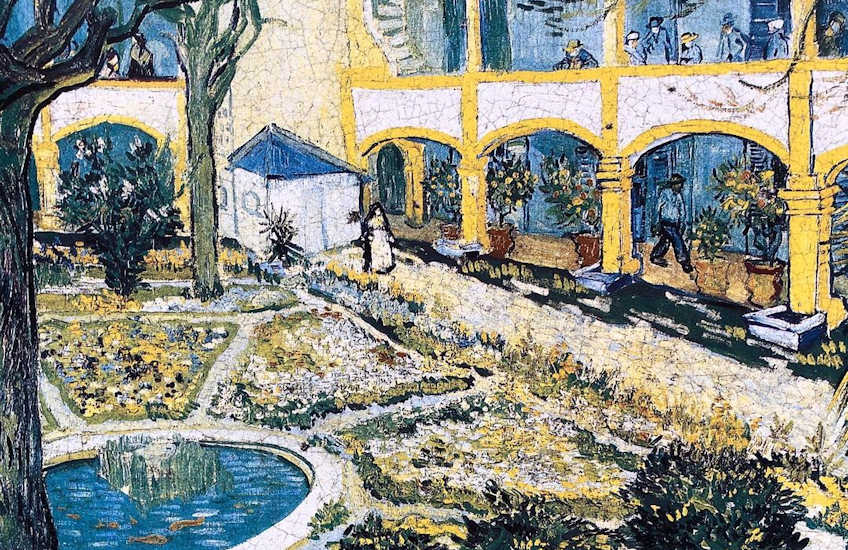
Espace van Gogh is located on the original site of the old hospital in Arles, where van Gogh spent time after he cut off his ear. It was immortalised in his painting Hopital d'Arles. Today the hospital has been converted into an open space with gardens, together with artist studios and small exhibition galleries.
It is well worth a visit and you will get a good view of one of his famous paintings. The scenery has changed a bit, but you can still recognise the garden and hospital from the painting.
There is also a small art trail that you can follow in and around Arles, where you can see the natural habitats that van Gogh and Gauguin painted. Next to each of the sites you will see information boards showing the original paintings and a description of what the artists was creating. Among the sites to see include:
- The Night Café/Le café de soir on Place de Forum;
- Le Pont de Langlois aux Lavandières (pictured below);
- L'Escalier du Pont de Trinquetaille;
- Starry Night/La Nuit Etoillée at Quai du Rhone;
- Le Vieux Moulin at rue Mireille
- Le Jardin de la maison de Santé at Espace Van Gogh
- Le Jardin Public at Boulevard des Lices
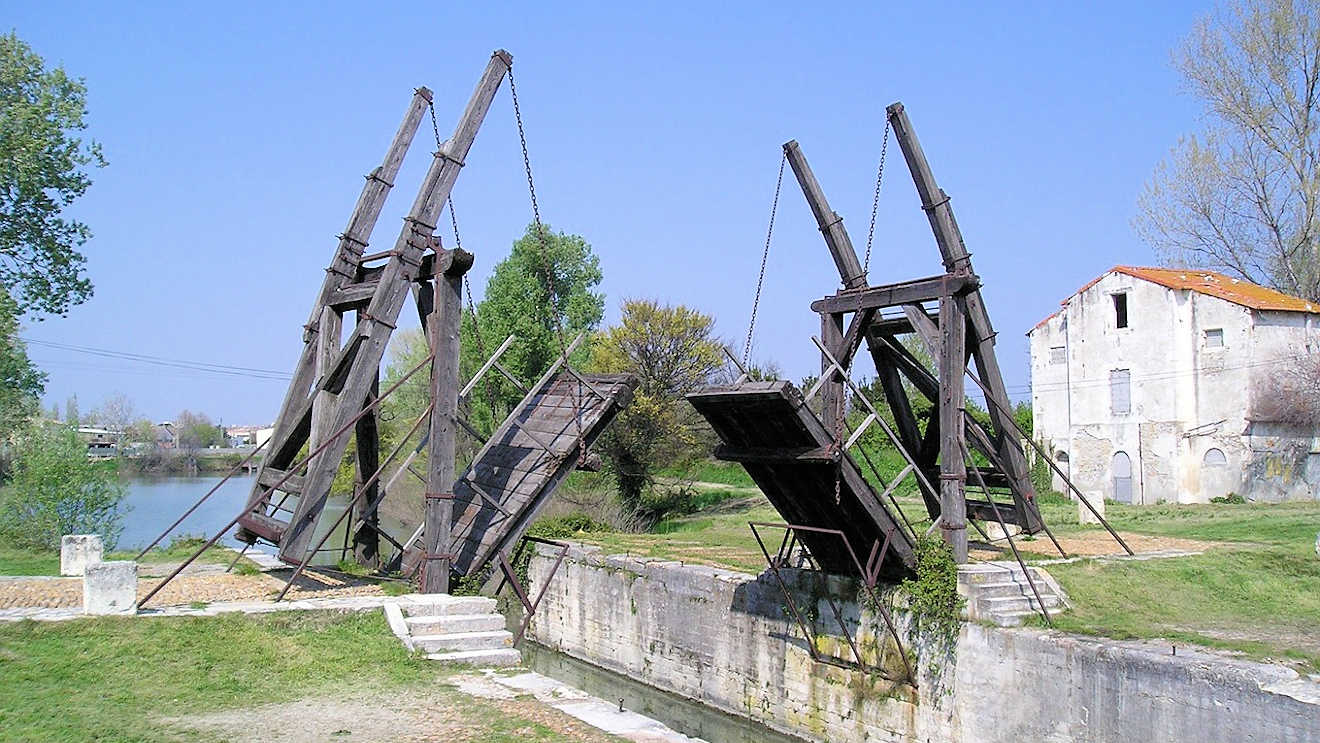 The scene of "Le Pont de Langlois aux Lavandières" today
Arles art galleries - Musee Reattu
Musee Reattu on the banks of the Rhone is a little museum featuring important works by Picasso and the 18th century artist Jacques Reattu. Apparently, Picasso was horrified to discover that despite van Gogh's close association with Arles, the town did not possess a single one of his paintings. To make amends he donated a significant number of drawings.
Since that time the Museum has obtained a number of van Gogh's letters to his brother, Theo van Gogh, but still no paintings.
10. Frank Gehry's Luma tower - Arles, South France
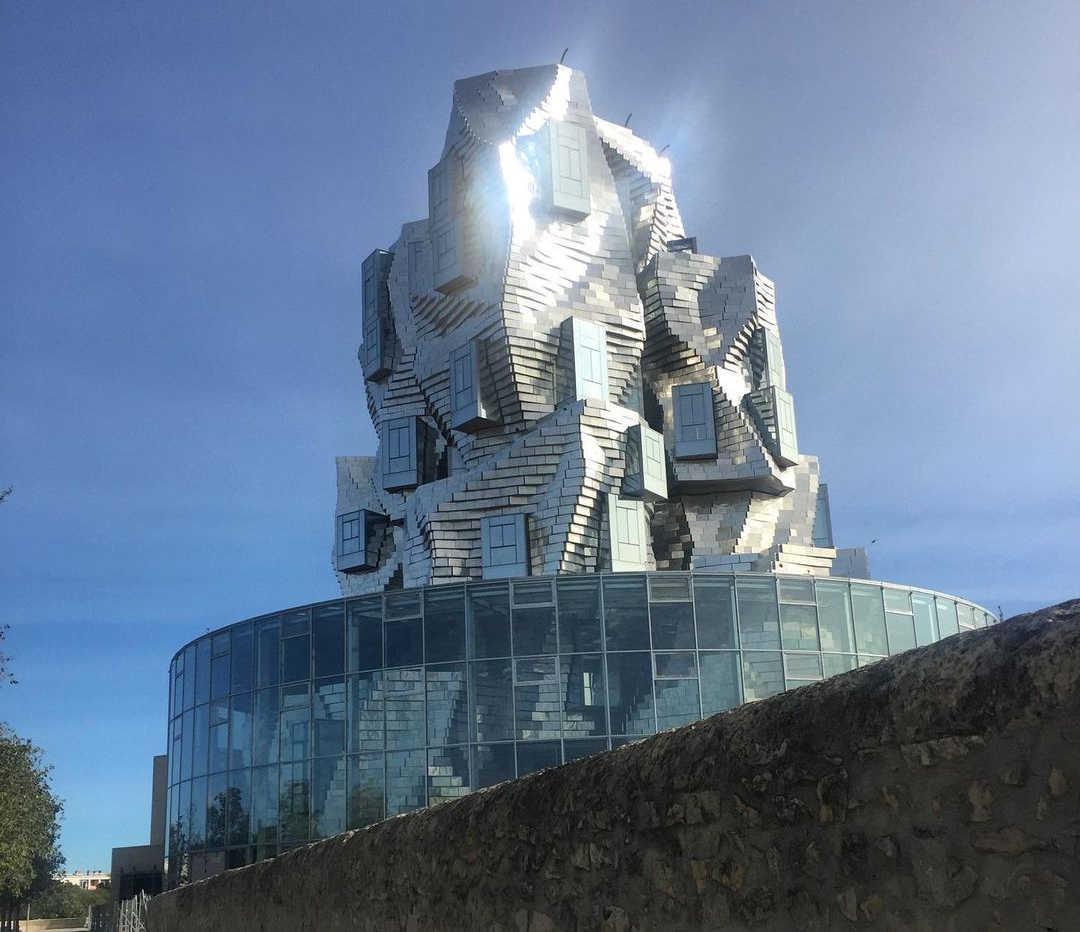
Staying in Arles, the newest addition to the plethora of art museums in South France, is the striking Luma Arles tower, designed by the celebrated Canadian/American architect, Frank Gehry. This amazing tower is made from 11,000 blocks of stainless steel and is the centre-piece of a 16-acre art-complex built on the site of the Parc des Arteliers, a former railway workshop and industrial site in Arles, France.
Luma Arles will operate as a contemporary arts centre where artists, researchers, and creators from diverse fields will work and collaborate on exhibitions and projects. At the centre of Luma Arles, Gehry's 56 metre tall tower will house a wide range of programs including research facilities, workshops, seminar rooms, and artist studios. At tower's base, there will be a large glass atrium that can be open to the general public.
Luma Arles is the brain child of Maja Hoffmann, a Swiss art collector, documentary filmmaker and entrepreneur. The overall campus is privately funded by Maja Hoffmann's Luma Foundation and the development cost around $175M in total. Hoffman chose Arles as the location of her project because of its famous association with the artists Vincent Van Gogh and Paul Gauguin.
Luma Arles Tower
Address : 33 Avenue Victor Hugo, 13200 Arles
Telephone : +33 04 90 47 76 17
Website : Luma Arles
11. Best modern art museums - Musee Carré d'Art, Nimes, France
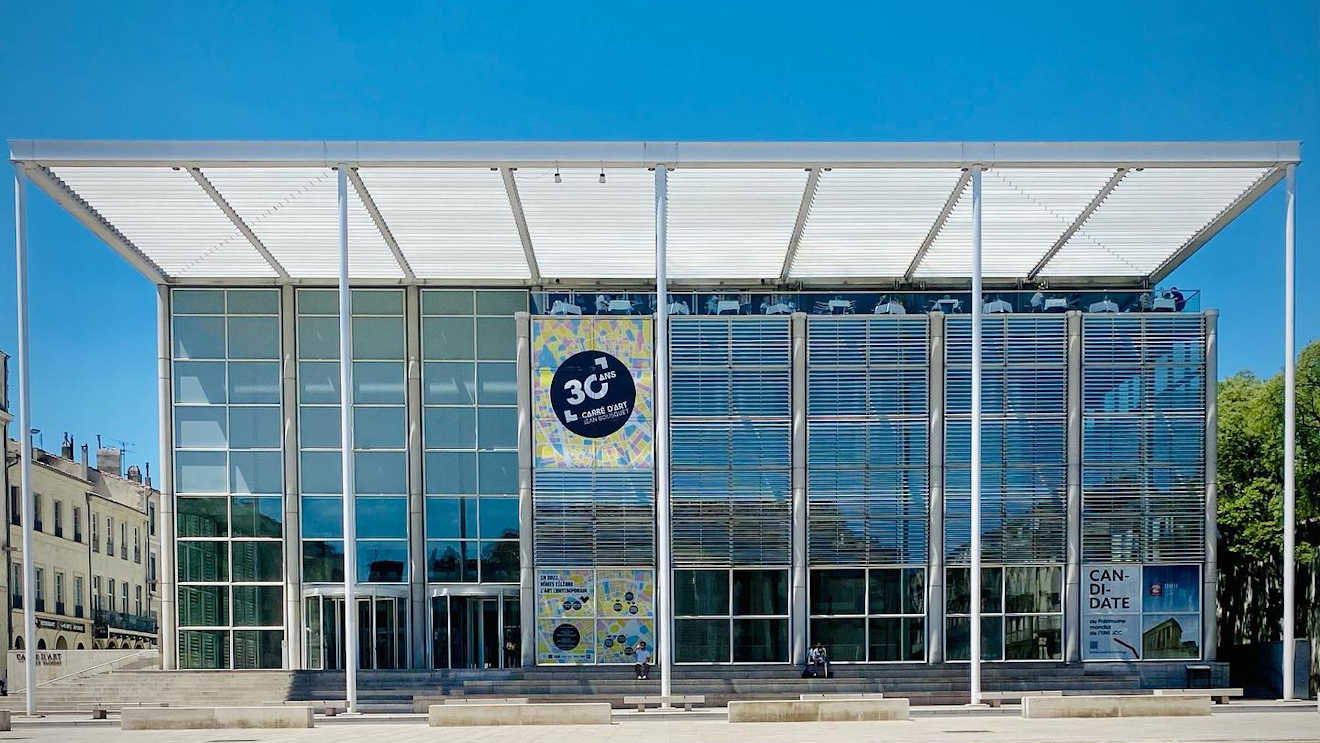
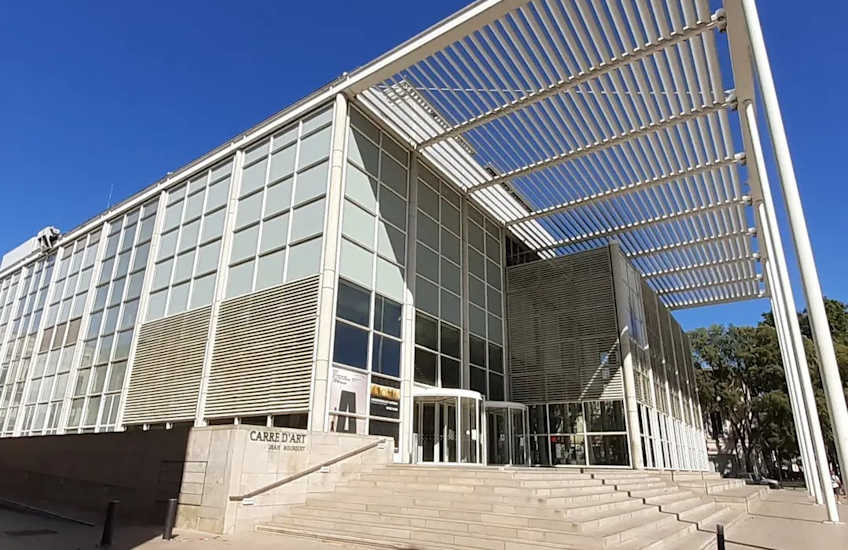
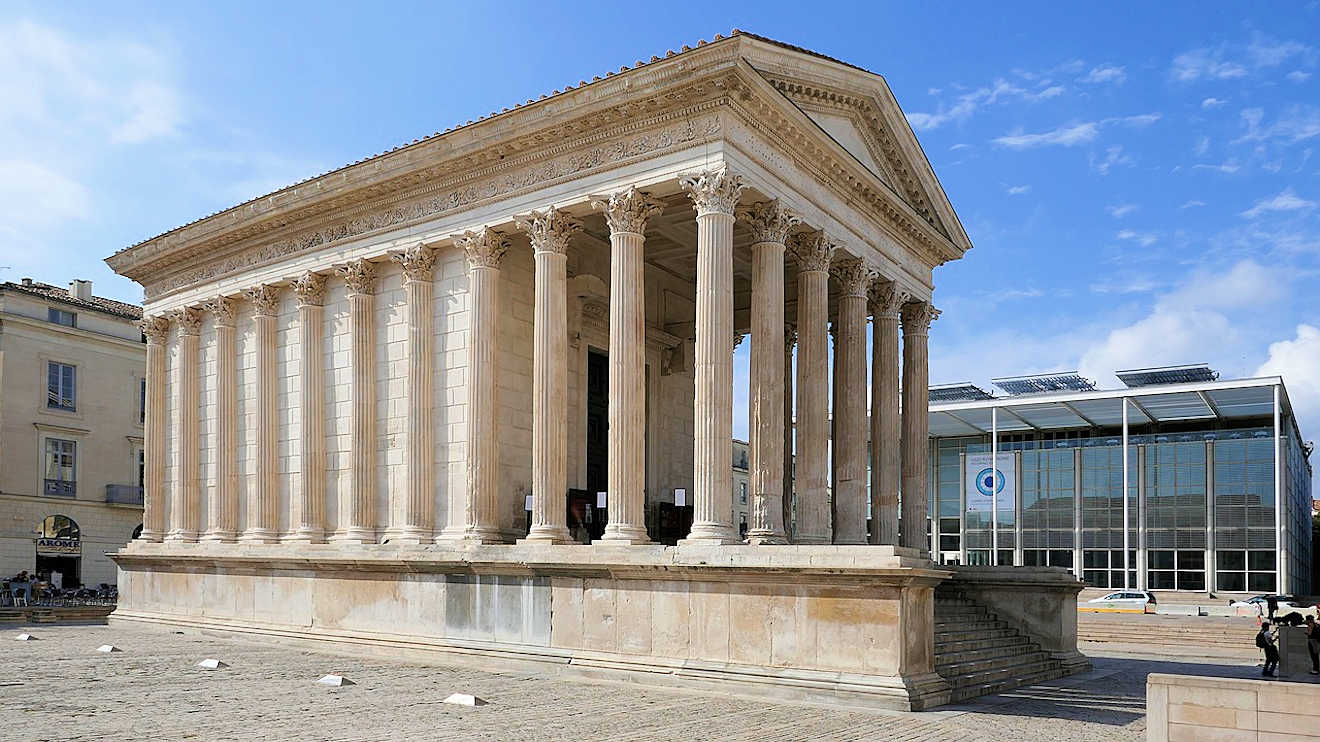 The modern art museum in Nimes, the Carre d'Art, was built in 1993 by English architect Norman Foster. The museum quickly established itself as one of the best museums of contemporary art in the South of France. The museum sits opposite the Maison Carree, one of the finest examples of a fully intact Roman temple, dating back to the 1st century BC.
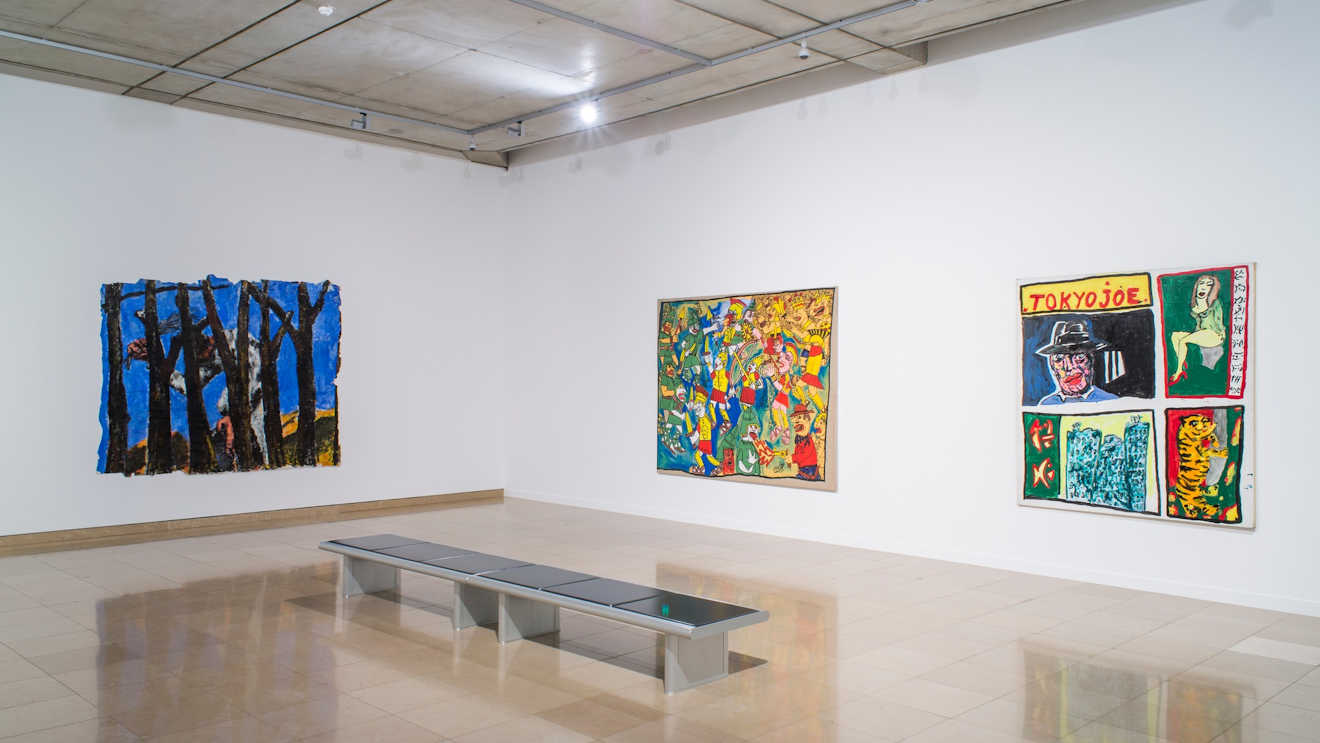
Musee Carré d'Art, Nimes modern art museum, hosts a number of collections and visiting modern art exhibitions. The permanent collections feature prominent artists associated with the South of France such as Mario Merz, Sophie Calle, Annette Messager and Suzanne Lafont.
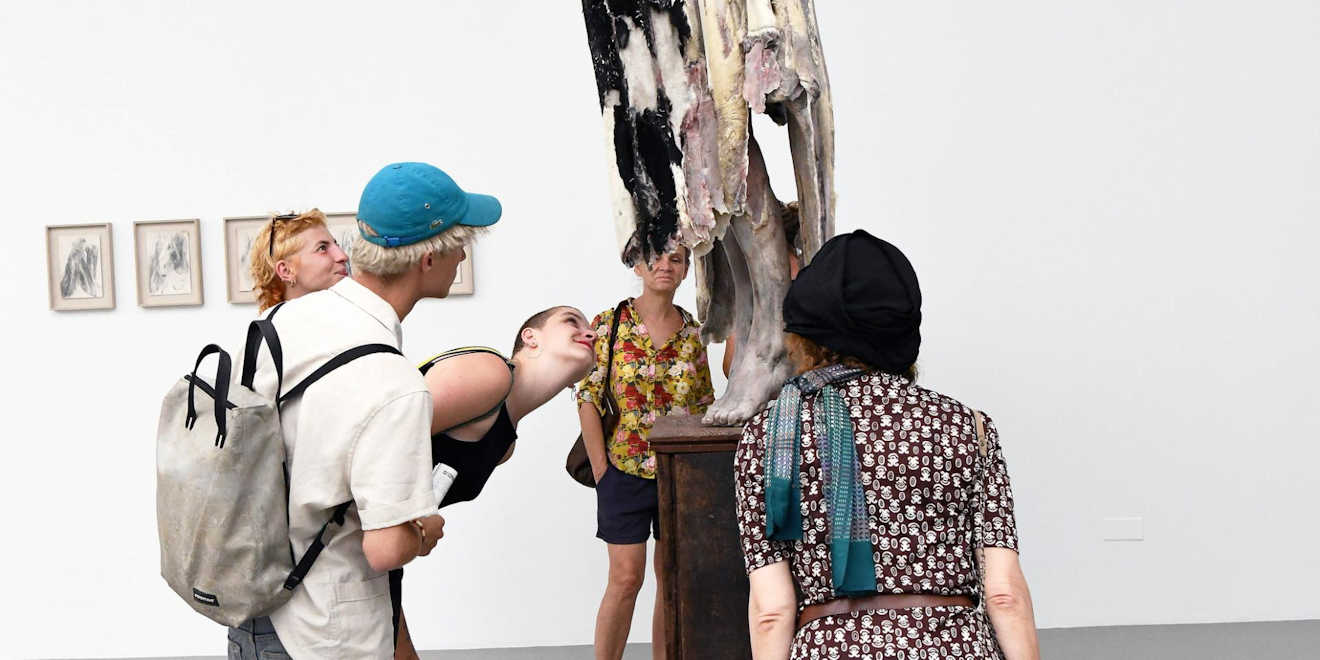
During 2026, the Carre d'Art, Nimes, will feature a visiting exhibition from the Swiss artist, Vivian Suter. The exhibition features a range of sculptures, paintings and drawings that explore the relationships between everyday objects and the human body.
Also appearing at the Carré d’Art will be a photographic exhibition by the Columbian artist and photographer, Felipe Romero Beltrán. The exhibition will run 29 April 2026 and will feature a set of 52 images of the Rio Bravo and feature questions of social justice.
Running from April to October 2026 will be an exhibition documenting the collaboration of the Serbian artist, Ida Tursic, and the French painter, Wilfried Mille. Their work draws on a wide range of landscapes, portraits, still life and abstract imagery, and features compositions with multiple layers, superimposed objects, cut-out panels, burnt wood and different fragments of color.
Musee Carré d'Art Nimes modern art museum
Address : 16 Place de la Maison Carrée, 30000 Nîmes, France
Phone : +33 4 66 76 35 35
Opening hours : 10.00 to 18.00, Tuesday to Sunday
Website : For more information on this Modern art museum in Nimes, South France, please visit the Musee Carre d'Art, Nimes website for the latest details.
12. Musée Fabre, Montpellier art gallery France
 Montpellier is one of the oldest cities in the South of France and it has had a dedicated art museum since 1828. Musee Fabre, is Montpellier's famed art museum and it has completed a €62 million facelift. The renovation has added a new wing and constructed a new walkway up to Musee Fabre designed by Daniel Buren. The exhibition spaces have been increased from 3,000 to 9,000 m2, including a temporary exhibition hall of 1,000 m2.
Musée Fabre is located in a beautiful old Mansion building over-looking the esplanade in the centre of Montpellier, close to the historic Place de la Comedie. The Museum is named after Francois-Xavier Fabre, a painter from the 18th Century, who established the Society of Fine Arts in Montpellier.
The museum attracted a number of important donations from private art collectors, including from the wealthy stockbroker Antoine Valedau, who bequeathed a large group art works from the Dutch and Flemish masters, Rubens, David Teniers, and Gérard Dou.
The family of the Montpellier painter Frédéric Bazille donated important paintings from his early Impressionism era (Vue de village, Aigues-Mortes, La Toilette, Atelier de la rue Furstenberg and Jeune femme aux peonies) and these were followed by other donations of works from Gustave Courbet (The Bathers or Les Baigneuses); Francois-Leon Benouville (The Wrath of Achilles); Eugene Delacroix (Fantasia, Algerian women in their room); and Alexandre Cabanel (Phèdre).
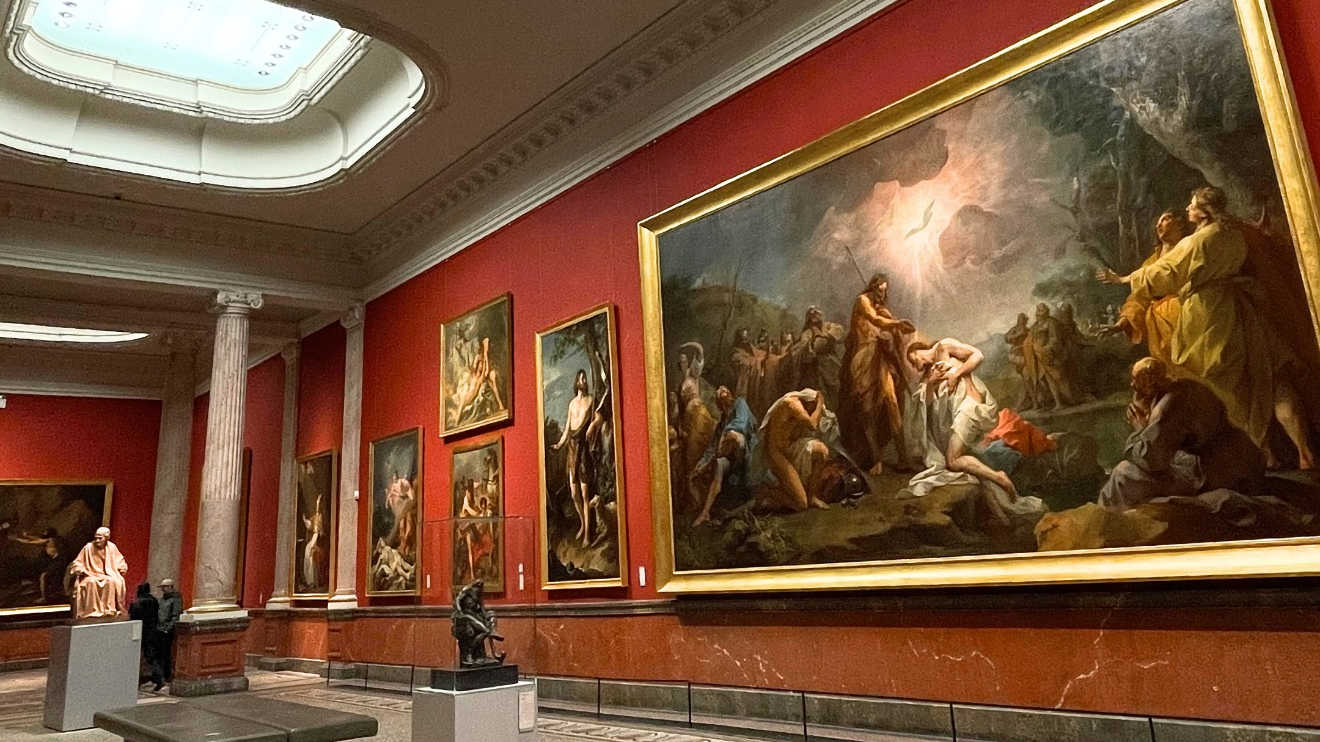
Gustave Courbet's Bonjour Monsieur Courbet is often regarded as Museum Fabre's flagship display, together with the two exhibition rooms devoted to the local painter and engraver, Pierre Soulages.
Other local artists feature heavily at Musée Fabre including Germaine Richier (La Montagne), who died in Montpellier in 1959 and the sculptors, Aristide Maillol, who was born and died in Banyuls-sur-Mer, near Perpignan; and René Iché, who was born in the nearby Aude department.
Other prominent works displayed from artists connected to the South of France, include Raoul Dufy; Jean Hugo; and Albert Marquet.
Musée Fabre Montpellier
Address : 39 Boulevard Bonne Nouvelle, 34000 Montpellier
Telephone : 04 67 14 83 00
Website : Musée Fabre
13. Serignan Modern art museum
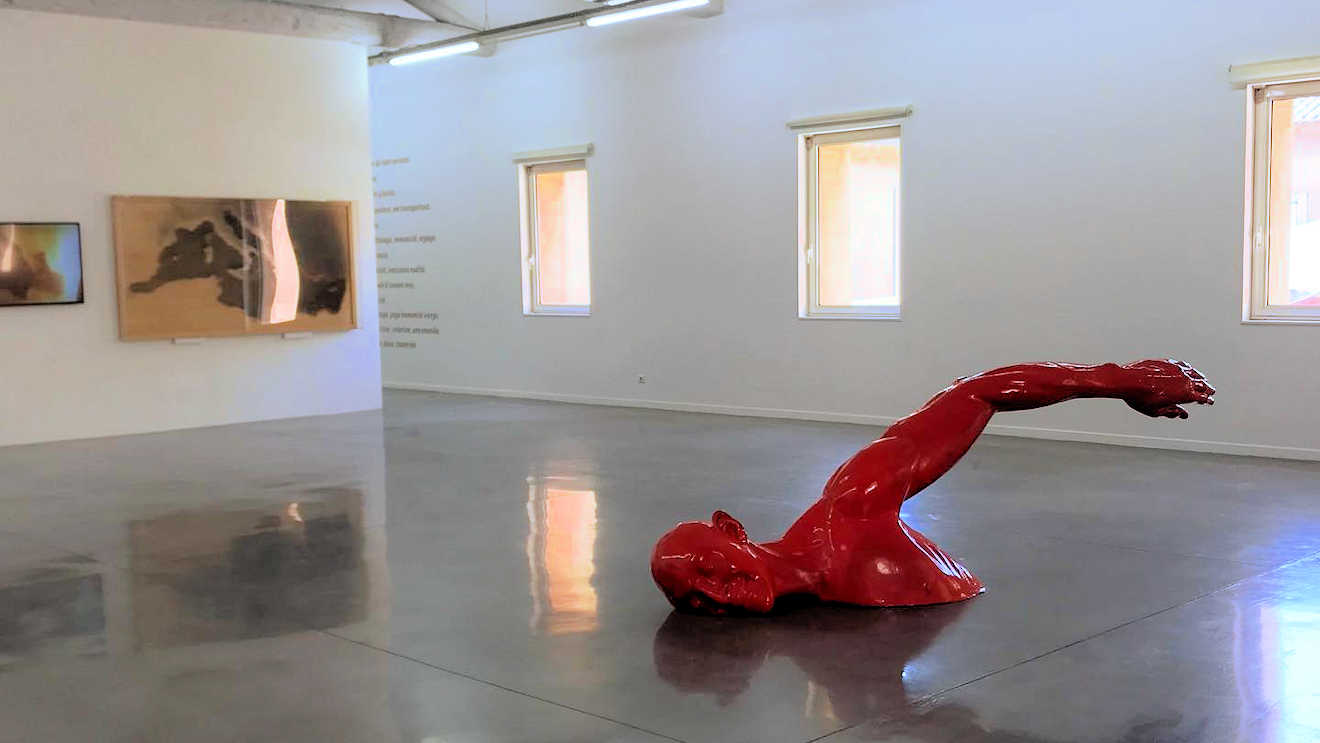
The little Languedoc coastal town of Serignan, just south of Beziers, is home to not only a modern art gallery, but also a popular contemporary theatre. In the centre of Serignan, a small hard working old Languedoc wine town, you will find a modern art gallery housed in a disused wine warehouse.
Serignan is probably more famous for the resort of Serignan Plage 5km down the road. Serignan Plage itself is a very nice beach and is very popular with campers (there are around 4-5 campsites here, including a naturist campsite). The influx of holiday-makers really adds to the atmosphere of Serignan town during the summer, as the bars and restaurants swell to accommodate their number.
Serignan modern art museum was opened in 2006 and the building design is very bold and allows plenty of natural light to flood into the gallery. Serignan art museum has quite a good permanent art collection, with works on show from Daniel Buren and Vincent Bioules. There are also frequent visiting exhibitions.
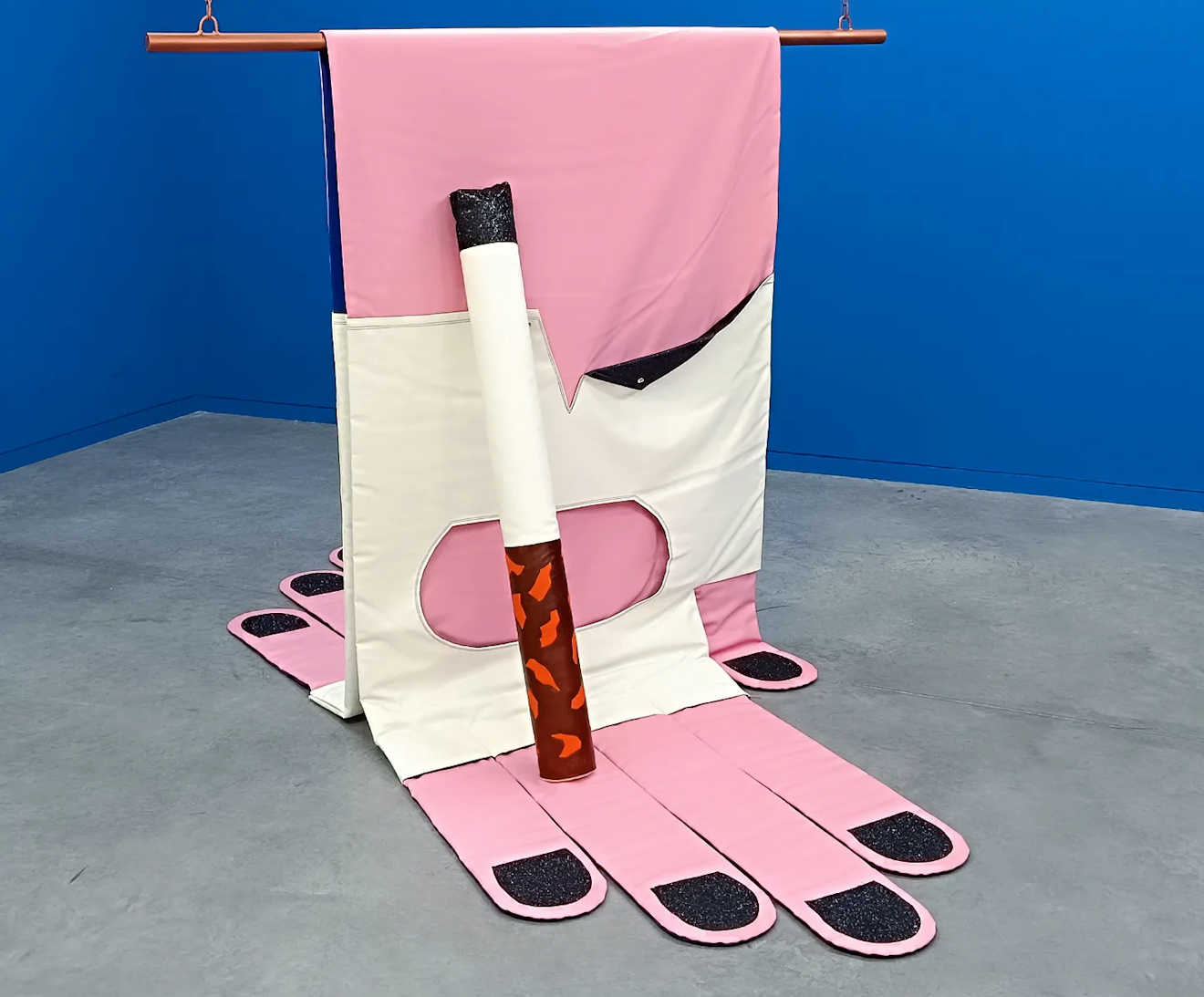
The Musée de Serignan is located on a small roundabout as you enter Serignan (after crossing over the Canal du Midi). This modern art museum in Languedoc is open every day except Monday's (1pm to 6pm). The entrance price is around €5.
Serignan Musée régional d'art contemporain Occitanie
Address : 146 Avenue de la Plage, 34410 Sérignan, France
Phone : +33 4 67 17 88 95
Opening hours : Tuesday to Friday: 10:00 to 18:00; Saturday and Sunday: 13:00 to 18:00
Website : visit Serignan MRAC Art Museum for more information on the latest exhibitions.
14. Top 10 art museums South France - Musee Riguad, Perpignan
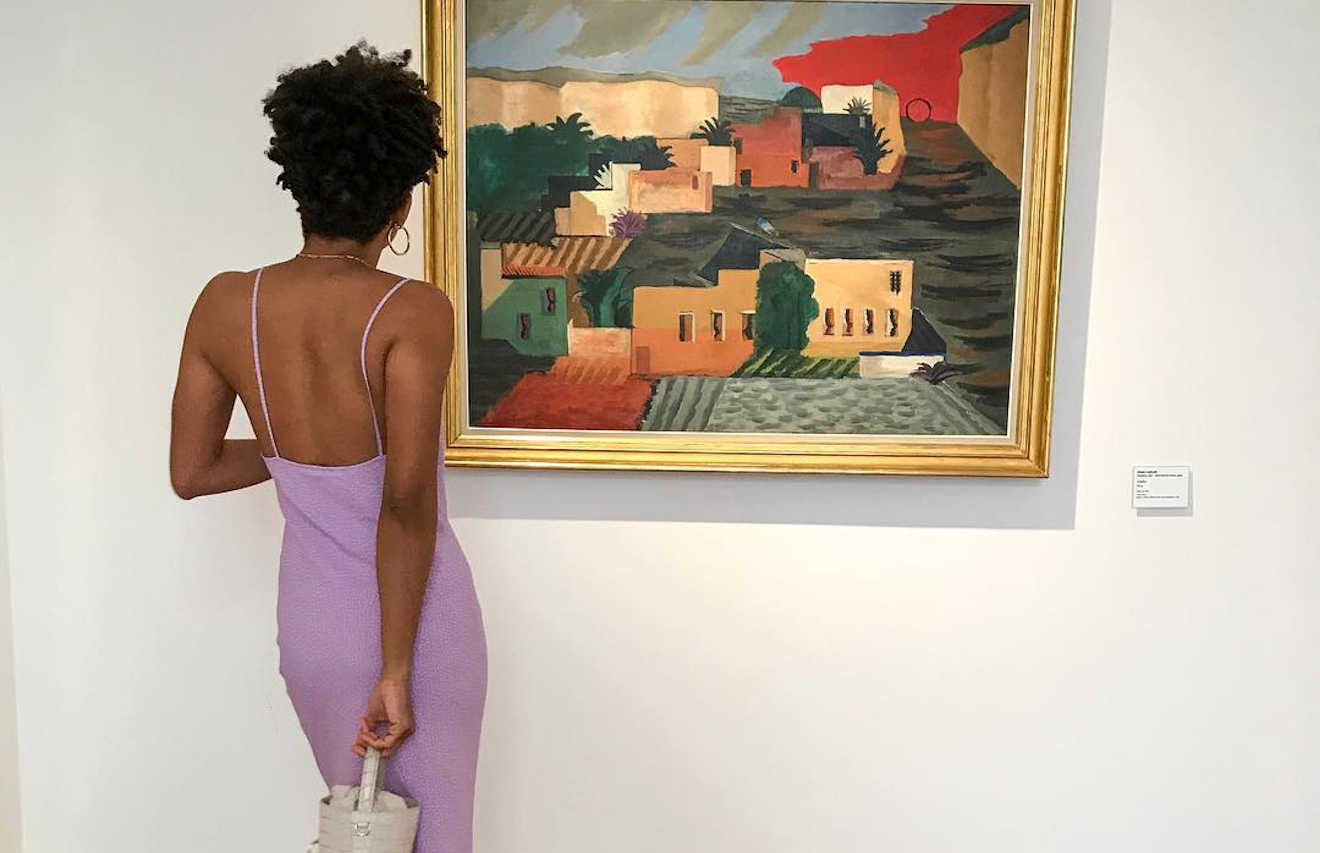 Musee Riguad serves as Perpignan's Museum of Art. This old 17th century Palace, was originally the workshop of the artist Hyacinthe Rigaud, a favourite of the court of Louis XIV. But it later served as a studio for a range of famous artists such as Picasso, Dufy, Maillol and Jean Cocteau. If you have time it is well worth popping in to see the collection of paintings from its former residents.
The first fine art museum in Perpignan was founded in 1833 and was originally housed in the Old University of Perpignan. The museum was later named after Rigaud. In 1979, the museum was moved to a beautiful old mansion house in Perpignan (Hôtel de Lazerme) and it was later enlarged in 2017, following a multi-million euros refit.
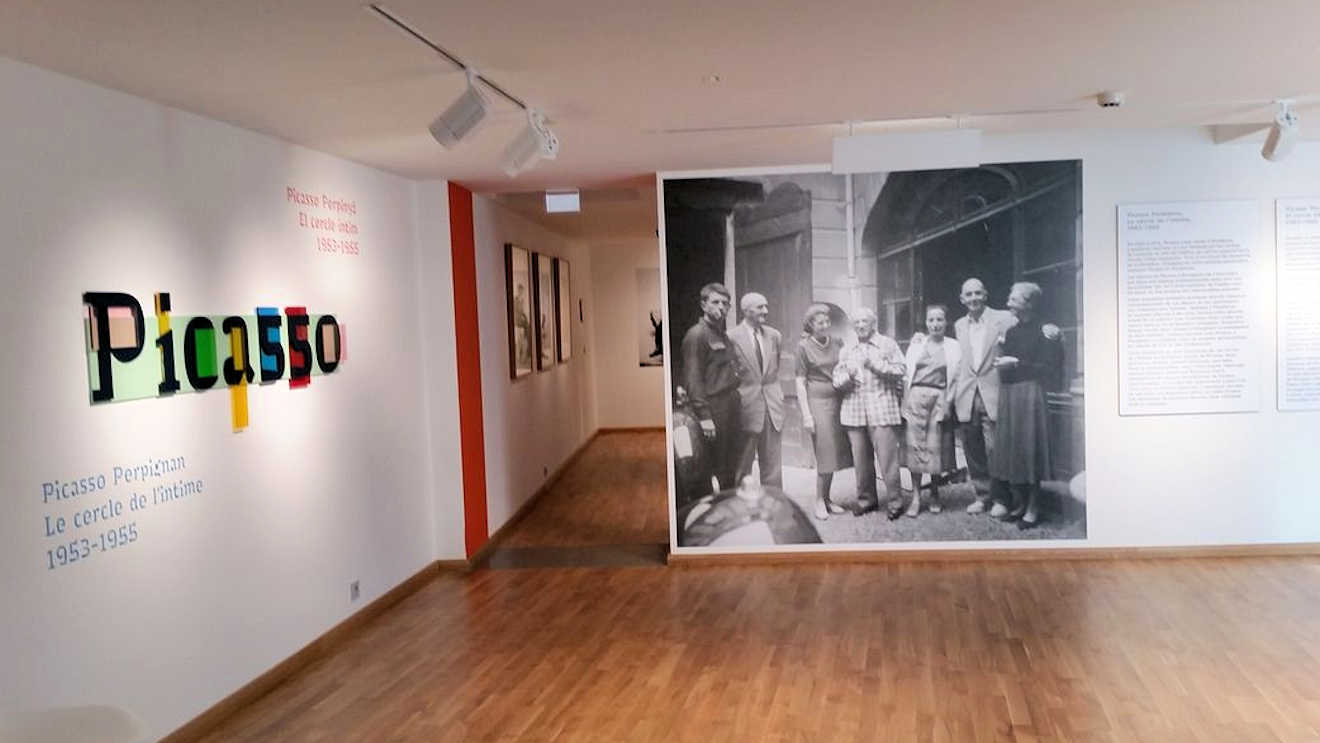
Musée Rigaud regularly receives over 70,000 visitors per year, making it one of Perpignan's most visited site. As well as featuring a number of prominent modern artists, such as Pablo Picasso, Raoul Dufy and the local sculptor, Aristide Maillol (who was born in the nearby coastal town of Banyuls-sur-Mer), the museum also highlights the work of several Baroque and Gothic artists. It also houses an important collection of artwork from Catalan artists, who were exiled during the Spanish Civil War.
The Museum also hosts many temporary exhibitions, featuring collections of works by Salvidor Dali and Paul Gauguin.
Musée Hyacinthe-Rigaud Perpignan art gallery
Address : 21 Rue Mailly, 66000 Perpignan, France.
Phone : +33 4 68 66 19 83
Opening hours : daily from 10:30 to 19:00 (June to September); Tuesday to Sunday from 11.00 to 17.00 (October to May).
Website: For more information on the latest exhibitions, please visit Musée Hyacynth Rigaud.
15. French art museums - Ceret Modern Art Museum
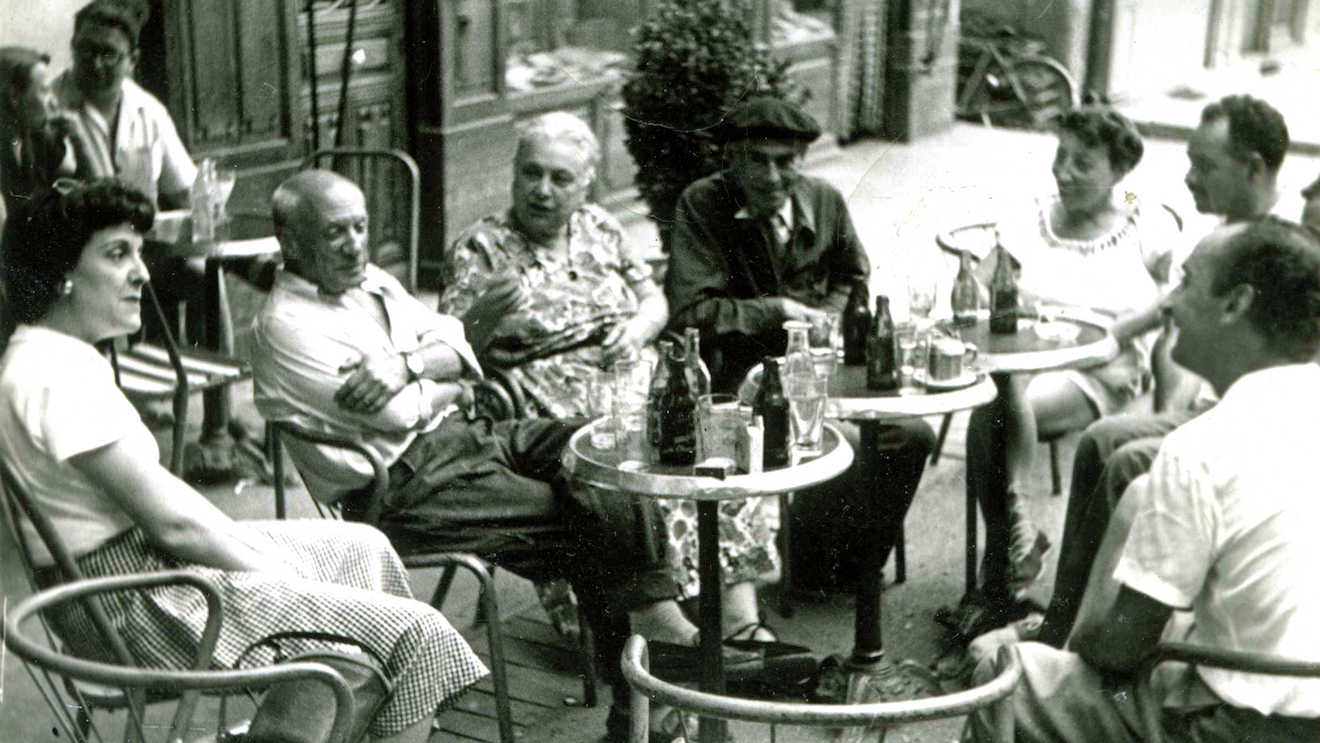 Pablo Picasso in Ceret, France in 1913 [Photo courtesy of https://www.ladepeche.fr/ CC archive]In the very bottom of South France, close to the border with Spain, the small town of Ceret has been a mecca for artists since the turn of the 19th Century. Ceret is located about 30 minutes' drive from Perpignan, and here you will find one of South France's top modern art museums.
The Ceret Modern Art Museum hosts some very well-known artists, including Miro, Chagall, Dali, Matisse, Picasso and Georges Braque. Ceret Modern Art Museum is located right in the centre of Ceret - you can't miss it.
1910 was a significant year in the development of the art scene in this small Southern French town. Three friends and artists arrived in Ceret by train from Paris: a sculptor, a composer and a painter. They retained a close association with Ceret throughout their lives.
The Catalan sculptor Manolo worked and lived in the Ceret until 1927. The composer Déodat de Séverac remained in Ceret until his death in 1921. The Cubist avant-garde painter Frank Burty Haviland, (who later married Joséphine Laporta) regularly visited Ceret until his death in 1971.
Through the influence of these 3 artists, Ceret became known as the "Mecca for Cubism". Other artists followed, including the Sculptor, Aristide Maillol, who was born in the nearby coastal town of Banyuls-sur-Mer; Picasso, who rented the first floor of a large bourgeois house in Ceret in 1912 and 1913; the famous Cubist painter Georges Braque; and the painters Juan Gris (between 1921 to 1922), Auguste Herbin (1918-1923) and Max Jacob ( in 1918) who lived and worked with Picasso and spent many evenings at the Grand Café with this close circle of artists.
Later, other prominent artists arrived in Ceret, including Pierre Brune, the Russian painter and sculptor, Pinchus Krémègne (who later built a workshop close by to Ceret), Berthol Mahn in 1928, Jean Osouf and Tristan Tzara in 1929, René Carvillani in 1934, Joan Maragall who made numerous visits to Ceret between 1921 and 1937; Marc Chagall, who moved to Mas Lloret near Ceret in 1928-1929; and Jean Dubuffet in 1939.
During the Second World War, Ceret briefly became a haven for intellectuals escaping the occupation of Paris, such as Jean Cassou, Jean Cocteau, Marc Saint-Saëns, Raoul Dufy and Albert Marquet.
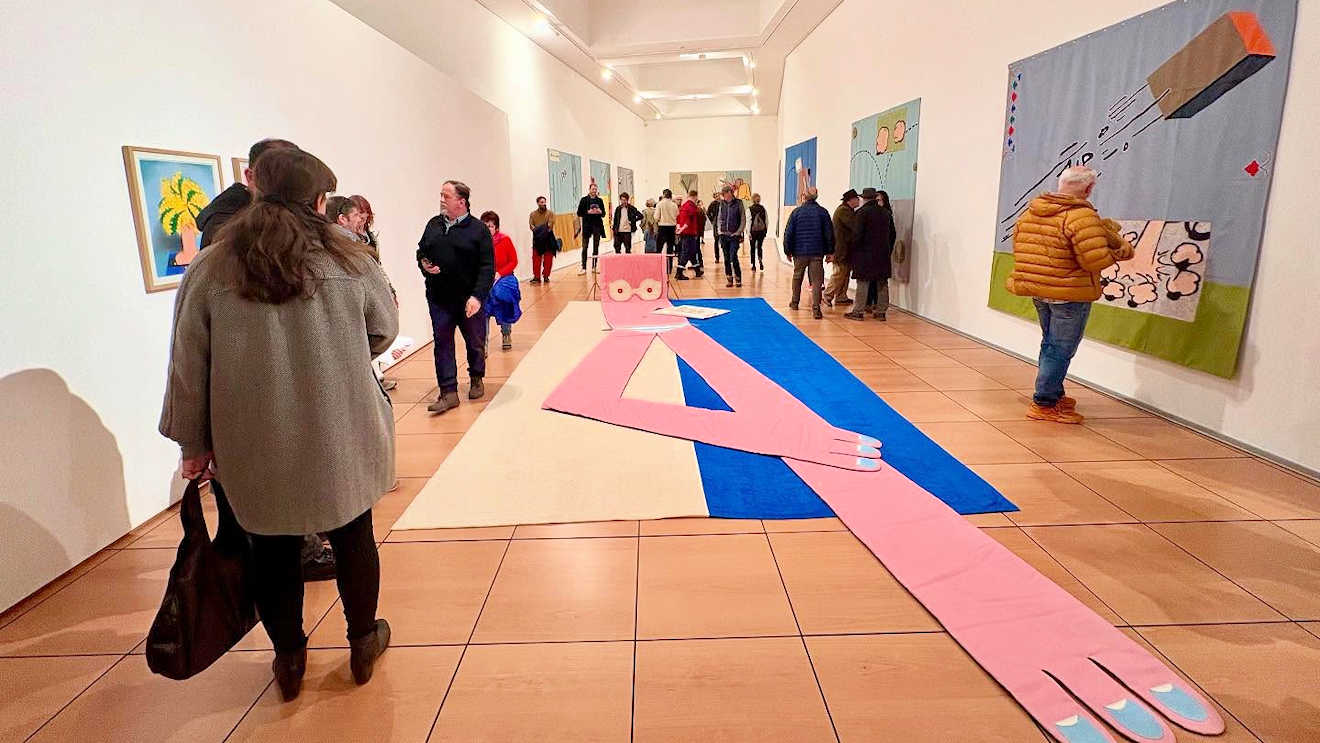
The background to the formation of the Ceret Modern Art Museum, lies with the wealthy widow of Michel Aribaud, a local wine merchant and art collector. She bequeathed a series of paintings and art works to the town by Herbin, Gris, Kisling, and Manolo.
Soon afterwards, in 1950, the local painters Frank Burty Haviland and Pierre Brune devised a plan for creating a museum of modern art, which would celebrate the role of Ceret in developing the Cubist and Fauvist movement. They contacted various artists connected to the town and with the help of Pablo Picasso, Marc Chagall, Joan Miró, and Henri Matisse in particular, they managed to assemble a fine collection of art work.
The museum was formerly inaugurated on18 June 1950 in the halls of the magnificent Capuchin Convent (which was owned by Haviland). The Museum was later extended during the 1980s and a new building was eventually opened by President Francois Mitterand in 1993.in 2025, Ceret Modern Art Museum celebrated 75 years since first opening its doors.
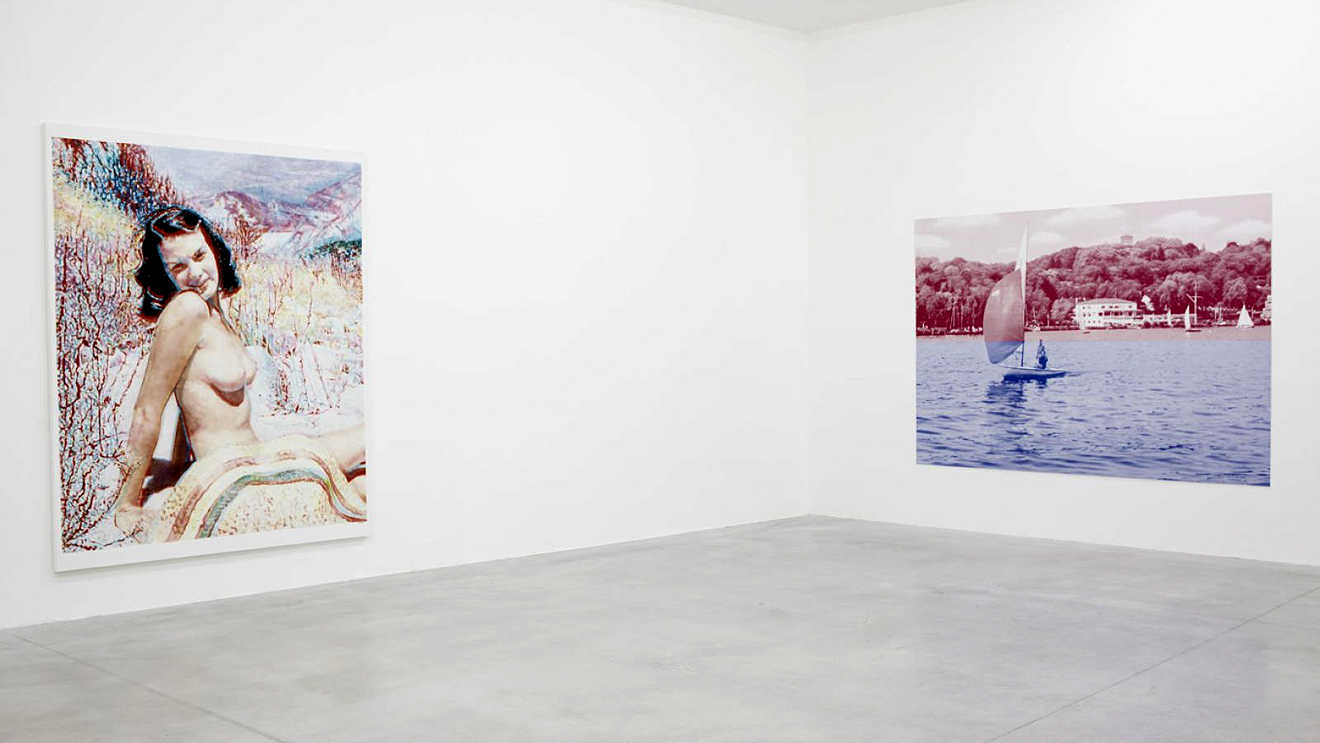
There is a permanent collection 78 works by Picasso (mainly ceramics), including 57 donated directly by the artist. Other works displayed span prominent artists from the Cubism, Fauvism and the School of Paris to Nouveau réalisme movements. There are paintings and sculptures by artists including Matisse, Auguste Herbin, Chaïm Soutine, Pierre Brune, Masson, Manolo, Pinkus, Krémègne, Juan, Gris, Marc Chagall, Raoul Dufy, Edouard Pignon, Léopold Survage.
Musée d'Art moderne de Céret
Address : 8 Boulevard Maréchal Joffre, 66400 Céret, France.
Opening hours : 10am-7pm in mid-summer, and till 6pm from Sept 16th-June 14th; closed Tuesdays.
Telephone : +33 04 68 87 27 76
Website : please visit musee-d-art-moderne-ceret for more information on the latest exhibitions.
16. Collioure modern art museum France - Fauvist artists
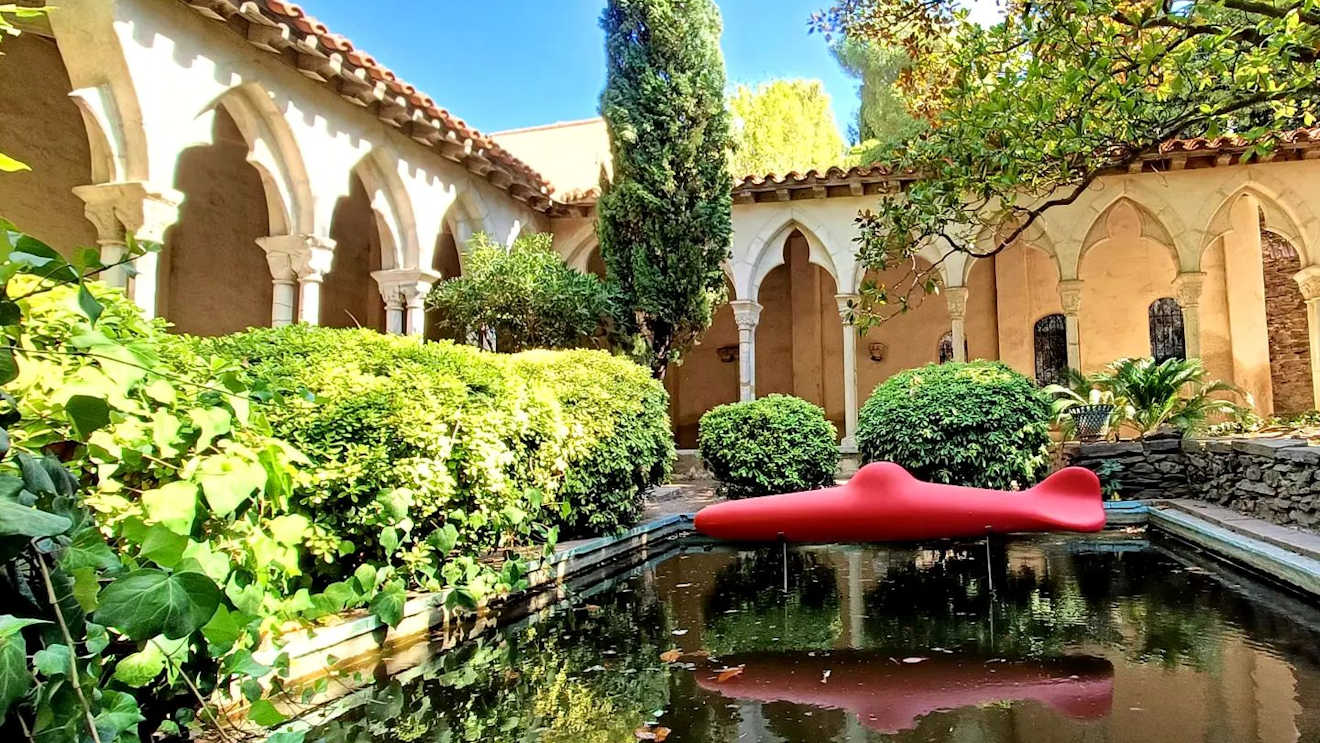 At the turn of the 20th Century, the small fishing port of Collioure, near to Perpignan and Ceret, became the Mecca of Fauvism. From 1905, the town was visited by a number of prominent artists, who would later become household names. Henri Matisse lived in Collioure periodically between 1906 and 1914 and he invited his friends André Derain, Georges Braques, Albert Marquet and Charles Camoin to join him in the town. At later periods, Collioure was visited by Pablo Picasso, Raoul Dufy, the Italian artist Amedeo Modigliani, the Scottish architect and painter, Charles Rennie Mackintosh and Salvador Dalí.
All were drawn to the special light in Collioure. The town is located on the Côte Vermeille, the only east-facing coastline in France. The intense Mediterranean sunlight bounces off the azure coloured sea in the bay and helps to blur the shadows. As a result, the landscape appears to glow with a vibrant, warm luminosity. Andre Derain, remarked during his summer stay in Collioure, that
"Collioure has no shadows."
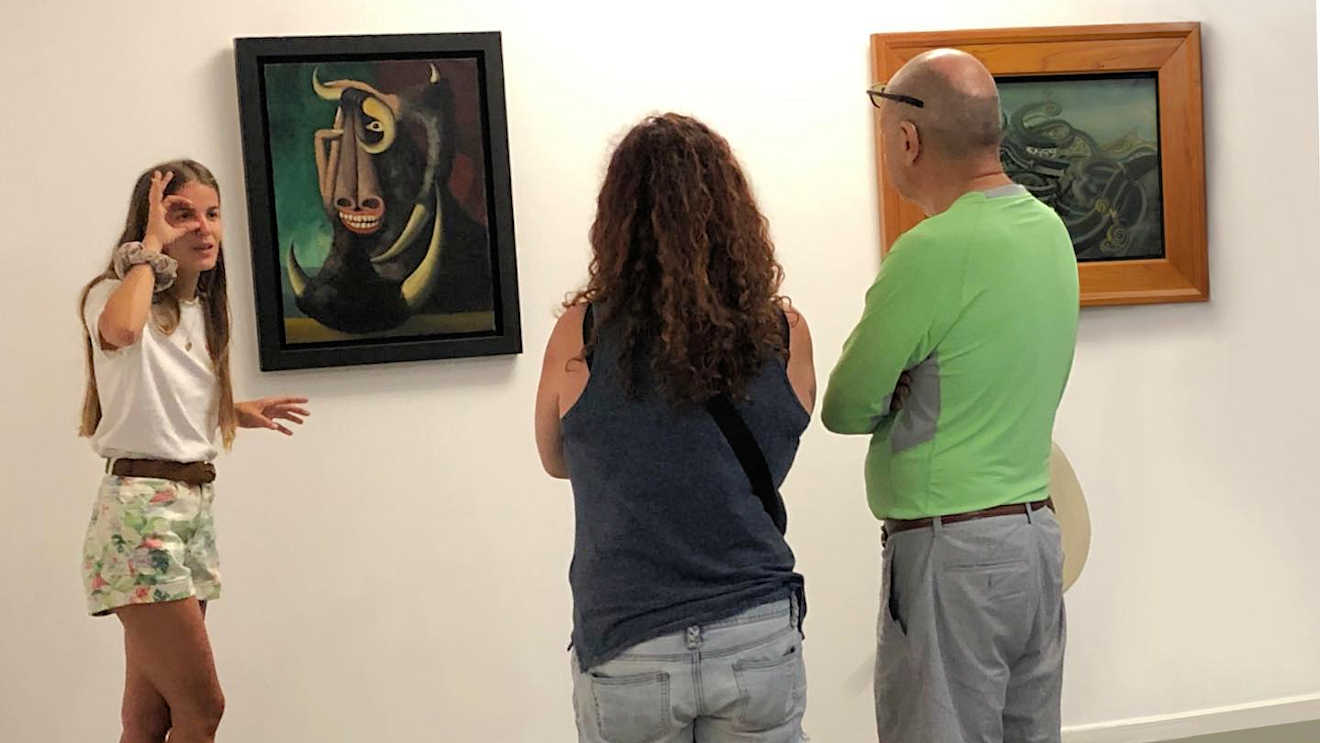
The Museum of Modern Art in Collioure was founded by Jean Peske in 1930. The Museum is housed in the beautiful Villa Pams, on the southern edge of the town. The museum features work by Matisse, Derain and Maillol.
The Museum also has many visiting exhibitions and gives over a large amount of space to contemporary artists. Indeed, since 1990 the winners of the biennial "Prix Collioure" have been invited to Collioure to work in the museum's studio for one year. A large exhibition marks the end of the year. When they leave, the artists give one of their creations to the museum.
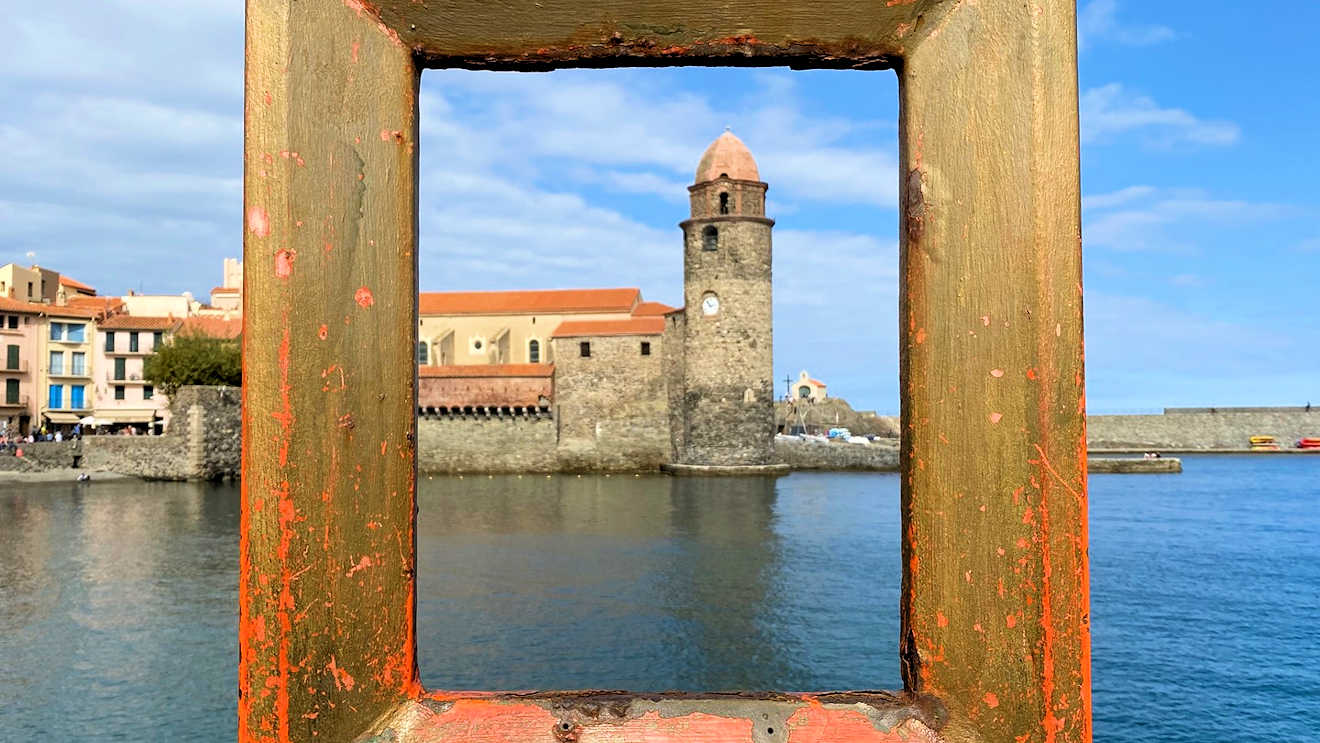
Even today, art is still an important activity in Collioure. With over thirty art galleries and many resident artists still working in and around the town, Collioure is right to proclaim itself the "Town of Artists". If you are an art lover, what makes Collioure such a great place to visit, is the Collioure art trail. At prominent places throughout the town, metal picture frames have been erected to frame the view that the famous artists saw when they painted the same scene over 100 years ago.
Next to each of the picture frames, is a plaque showing a reproduction of the original artwork and a description of the painting. The frames show many of the views that featured in the paintings of Derain, Maillol, Matisse and Raoul Dufy. There are over 20 picture frames dotted around Collioure and there is a route that is clearly marked out for the art trail. What is perhaps reassuring, is that in many cases, the view is clearly still recognisable from the paintings. See Collioure art trail South France for more information.
Musée d'Art Moderne de Collioure
Address : 4 Route de Port-Vendres, 66190 Collioure, France
Phone : +33430440546
Opening hours : Daily from 10:00–12:00 and 14:00–18:00. Closed on public holidays and every Tuesday (between October and May)
Website : For more information about the Museum of Modern Art in Collioure, please visit the Collioure Modern art museum.
Where to next . . . ?
If you are visiting the South of France this summer, then get the inside track on the best Places to see & visit in the South of France in 2026 (written by people who live in Southern France all year around). Read about the best restaurants to eat at, get local information on the best beaches to visit and discover the best tourist sites, markets and festivals to see during your stay.
|
|
|
|
|
|
|
|
|
Contact us by Email if you have any particular questions you would like to ask about visiting the South of France. If you liked the article then please share it with others using the Instagram and Facebook buttons. I wish you a wonderful stay in the South of France.


 The Mediterranean beach resort of Cap d'Agde in the South of France is the biggest holiday resort...
 If you are a lover of history then you are in luck in the South of France. There are some...
 If you are visiting the Languedoc region on vacation and you are staying near to the Canal du...